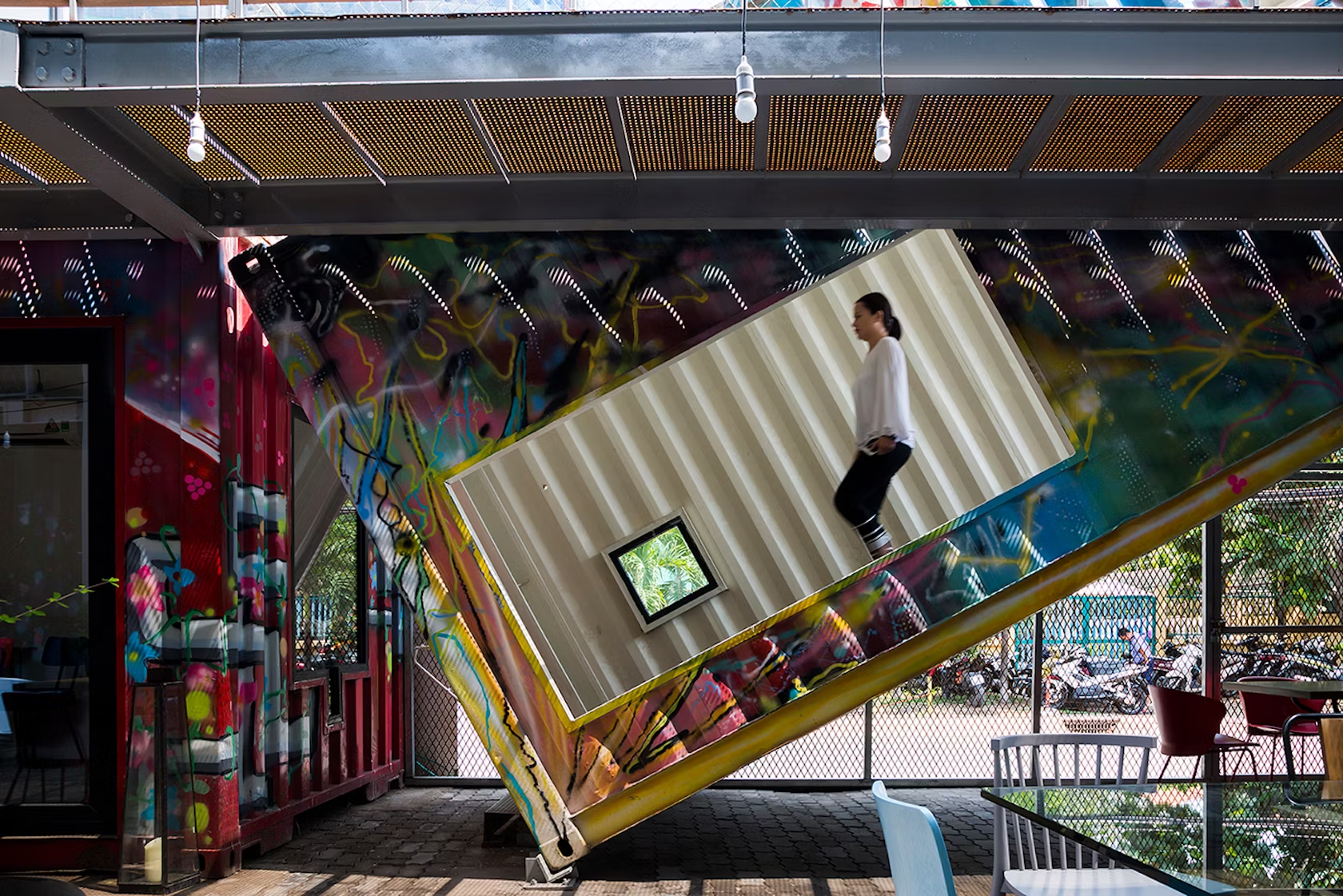
Adaptive reuse is reshaping Asia’s urban landscape by giving new life to old structures, from industrial warehouses and colonial relics to religious sites and cultural icons. This article highlights seven outstanding projects that illustrate how architecture can preserve heritage while meeting contemporary needs. Together, they reveal how adaptive reuse fosters sustainability, cultural continuity, and innovation in some of the world’s fastest-changing cities.
In a region where cities are expanding at an unprecedented pace, adaptive reuse has become a vital strategy for balancing progress with preservation. By transforming old structures into new cultural, commercial, or residential landmarks, adaptive reuse not only reduces waste and environmental impact but also keeps alive the narratives embedded in built heritage. Asia, with its deep history and rapid modernization, offers some of the most compelling examples of this practice.
1. Tai Kwun Centre for Heritage and Arts, Hong Kong
Once the city’s Central Police Station compound, Tai Kwun has been meticulously restored and reimagined as a vibrant cultural hub. Designed by Herzog & de Meuron with Purcell, the project combines 16 historic buildings with new contemporary additions, housing art galleries, performance spaces, and dining venues. It demonstrates how heritage preservation and modern creativity can coexist, revitalizing Hong Kong’s urban core.

Tai Kwun’s restored courtyard now serves as a gathering place for art, culture, and community
2. Shanghai Power Station of Art, China
China’s first state-run contemporary art museum emerged from a 1950s power station along the Huangpu River. Retaining its industrial skeleton and iconic smokestack, the building by Atelier Deshaus reflects the city’s transition from industrial powerhouse to cultural capital. Its raw yet refined aesthetic highlights the beauty of industrial heritage while supporting Shanghai’s contemporary art scene.

The Power Station of Art embraces its industrial roots while hosting global exhibitions.
3. Blue House Cluster, Hong Kong
The Blue House, a tong lau (tenement building) dating back to the 1920s, has been preserved not only as architecture but as a living community. Instead of turning it into a museum, architects and NGOs developed a “house with people” approach, where original residents remain while cultural spaces coexist. The project won a UNESCO Asia-Pacific Award for Cultural Heritage Conservation.

Blue House stands as a model of community-centered conservation
4. Warehouse 30, Bangkok, Thailand
Revitalized by Duangrit Bunnag, Warehouse 30 transformed WWII-era warehouses into a creative district along the Chao Phraya River. Now home to cafés, shops, galleries, and event spaces, it exemplifies Bangkok’s growing creative economy while preserving its riverside industrial past.

Warehouse 30 blends gritty industrial heritage with modern creative energy
5. Oil Tank Culture Park, Seoul, South Korea
Originally built in 1976 as a strategic oil reserve, the Mapo Oil Depot was decommissioned in 2000 and later reborn as Oil Tank Culture Park in 2017. The transformation by Seoul Metropolitan Government and architect Choi Jeongho preserved the six massive oil tanks, converting them into exhibition halls, performance venues, and community spaces. By maintaining the raw industrial character while layering in new public functions, the project demonstrates how adaptive reuse can heal environmental scars and provide much-needed cultural infrastructure for a dense metropolis.

Oil Tank Culture Park turns decommissioned oil tanks into cultural spaces for the city.
6. The Factory Contemporary Arts Centre, Ho Chi Minh City, Vietnam
Established in 2016, The Factory is Vietnam’s first purpose-built space for contemporary art, created by repurposing an industrial warehouse in District 2. Its adaptive reuse highlights how old factory structures can be transformed into vibrant cultural infrastructure. Retaining its steel frame and industrial character, the space is filled with flexible galleries, workshops, and community areas. Beyond showcasing art, The Factory fosters dialogue, education, and collaboration, proving that industrial reuse can help cultivate Vietnam’s creative economy.

The Factory Contemporary Arts Centre transforms an old warehouse into a vibrant cultural hub in Ho Chi Minh City.
7. Gillman Barracks, Singapore
A former British military camp built in 1936, Gillman Barracks has been adapted into a contemporary arts cluster. Surrounded by lush greenery, the barracks house international galleries, research institutions, and creative businesses, positioning Singapore as a hub for contemporary art while preserving its colonial heritage.

Gillman Barracks redefines colonial heritage as a regional art destination
Design Lessons from Adaptive Reuse in Asia
+ Cultural continuity matters: Successful projects retain not just the building’s shell but its social meaning, as seen in Blue House.
+ Contrast enriches experience: Juxtaposing new interventions with old structures, like Tai Kwun and Power Station of Art, enhances both.
+ Community engagement is vital: Projects thrive when they involve people, not just buildings.
+ Sustainability through preservation: Reusing structures reduces demolition waste and embedded carbon, a critical factor in Asia’s urban future.
Conclusion
Adaptive reuse in Asia proves that architecture is not only about new construction but about giving old structures new relevance. These projects showcase how heritage, community, and creativity can intersect, offering sustainable pathways for urban development. As Asian cities continue to evolve, adaptive reuse will remain a powerful tool for bridging the past and the future.
Save this story. A free account keeps your reading list and the 07:00 email in one place.
CREATE FREE ACCOUNT →SIGN IN