The Problem With Perfect Surfaces
There's a particular coldness that comes with industrial perfection. Walk through any contemporary lobby clad in flawless stone-effect porcelain and you'll feel it: the uncanny smoothness, the machine-precision repeat, the absence of anything remotely human. At World Archi Design, we've been tracking a quiet counter-movement over the past decade, one that asks whether advanced manufacturing might learn to speak in the vernacular of the workshop rather than the factory floor. Matteo Thun's decade-long partnership with Florim represents one of the more thoughtful answers to that question, and SensiTerre, their newest ceramic surface collection, pushes the conversation into genuinely haptic territory.
A Vase Collection as Precedent
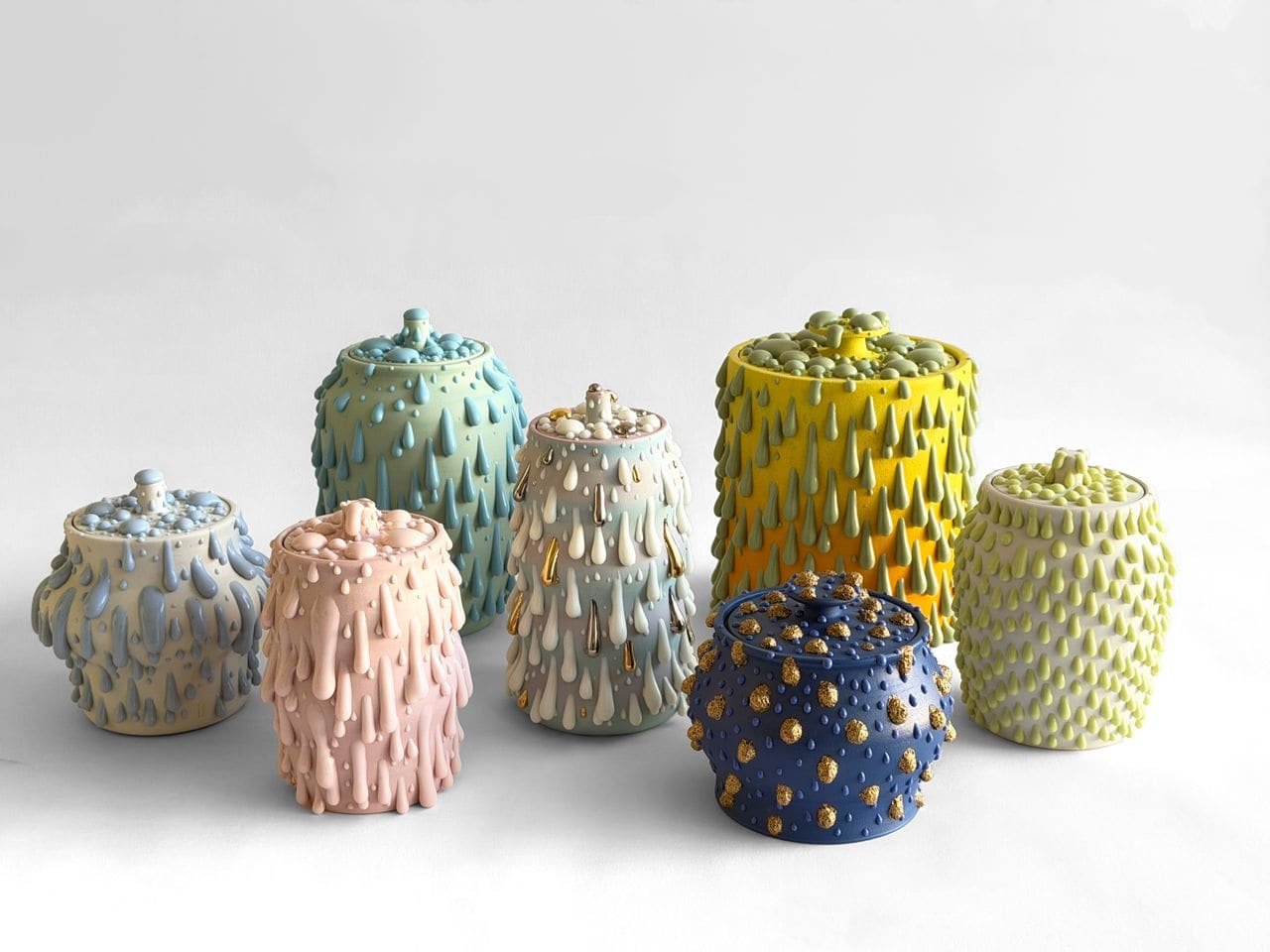
The collection's conceptual anchor sits surprisingly far from architecture. Ten years ago, Thun collaborated with Benedetto Fasciana and Bitossi on Venere Bianca, a limited run of terracotta vessels that drew heavily on Renaissance workshop traditions. Those pieces carried all the markers of true craft: archetypal forms, visible tool marks, the slight irregularities that come from human hands working wet clay. SensiTerre takes that vocabulary and asks what happens when you scale it to wall and floor dimensions, when you move from the intimacy of a vase you cradle in two hands to surfaces measured in square metres.
The translation isn't literal. Thun isn't simply photographing terracotta and printing it onto tiles. Instead, the design isolates specific textural moments from those original vessels: the drag of a comb through soft clay, the stippled pattern of crushed aggregate, the matte bloom of unglazed earthenware. These become the formal language of a porcelain system that retains the material memory of its artisanal reference without pretending to be handmade.
Six Colours That Refuse Brightness
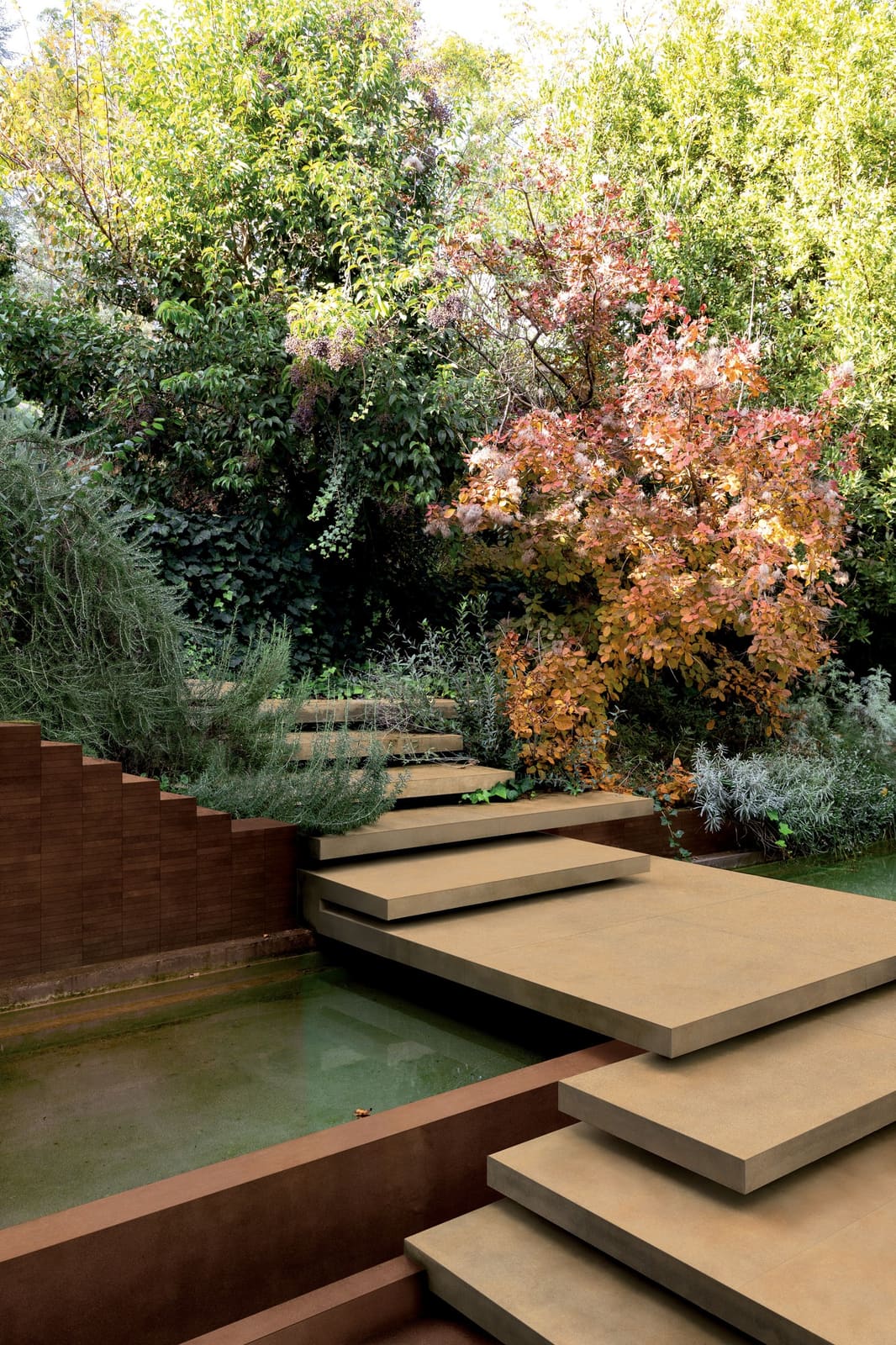
Florim introduced six colourways for SensiTerre, each named for the earthy palette of worked clay: Cotone, Sabbia, Rosato, Mattone, Amaranto, and Carbone. These aren't the saturated terracottas you'd find in a Tuscan hilltown or the stark whites of Cycladic vernacular. Instead, they occupy a middle register that reads as both neutral and complex, dusty enough to recede but vibrant enough to hold presence. Mattone leans into the warm ochres of fired brick without the orange intensity; Amaranto offers a muted burgundy that suggests oxidised iron; Carbone delivers a charcoal that avoids the flatness of pure grey.
This restraint matters. One of the failures of early biomimetic surfaces was their tendency toward caricature, pushing "natural" palettes into exaggerated saturation that felt more theme-park than tectonic. Thun's colour strategy here is closer to what we've seen in recent work by Studio Mumbai or the muted materiality of Álvaro Siza's late projects: colours that acknowledge their debt to earth without trying to be earth.
Four Finishes, Four Craft Techniques
The surface treatment is where SensiTerre earns its tactile ambitions. Florim developed four distinct finishes, each translating a specific artisanal technique into repeatable porcelain texture. Naturale maintains the raw, unglazed quality of terracotta, a matte finish that absorbs rather than reflects light. Grana references cocciopesto, the Roman hydraulic mortar made from crushed brick and terracotta fragments, replicating the granular texture of that ancient composite material.
Rigatino and Cannettato are the more explicitly indexical finishes. Rigatino mimics the parallel grooves left by combing tools drawn through wet clay, a texture common in traditional pottery that creates subtle linear relief. Cannettato takes its cue from engraving marks and deeper incisions, the kind of deliberate scoring that potters use to create visual rhythm on vessel surfaces. Both finishes resist the smoothness we've come to expect from contemporary porcelain, introducing friction and shadow-play that change depending on light angle and viewing distance.
Florim describes the collection as designed to be "touched with the eyes and seen with the fingers," a phrase that neatly captures the synesthetic quality these textures aim for. It's an old idea in material phenomenology, the notion that vision is never purely optical but always informed by remembered touch. Juhani Pallasmaa wrote extensively about this in The Eyes of the Skin, arguing that architecture's most powerful effects come from surfaces that invite both visual and tactile engagement. SensiTerre operates in that register, banking on the idea that even when we don't physically touch a wall, we're mentally simulating what that contact would feel like.
Modular Formats and Spatial Application
The collection is available in modular formats that allow for varied installation patterns across both horizontal and vertical planes. This isn't a single large-format slab system but a deliberately flexible kit of parts, closer in spirit to traditional tile laying than to the seamless stone-veneered walls that dominate high-end hospitality design. That modularity matters because it reinforces the craft reference: traditional terracotta work is inherently modular, built up from individual units rather than carved from monolithic blocks.
In practice, this means designers can create rhythm and articulation through layout strategy, alternating finishes within a single colourway or mixing scales to generate visual texture beyond what the surface relief provides. It's a more labour-intensive approach than simply cladding a wall in identical large-format panels, but it yields spatial effects that feel composed rather than applied.
Industry 4.0 Meets Pre-Industrial Memory
Here's the tension that makes SensiTerre more interesting than simple nostalgia: it's produced using the most advanced ceramic manufacturing technology available, in facilities that represent the cutting edge of industrial automation. Florim's production lines recover all raw material waste and wastewater, operate as certified B Corps, and generate their own electricity supplemented by renewable sources when demand exceeds on-site capacity. This is Industry 4.0 manufacturing, complete with real-time data monitoring, robotic handling systems, and precision digital printing.
Yet the product of all that technology is a surface that works hard to evoke pre-industrial craft. That's not a contradiction so much as a design philosophy: the belief that advanced manufacturing should expand the formal vocabulary available to designers rather than narrow it to whatever produces the highest margin at the lowest cost. We've seen similar approaches in textile design, where digital Jacquard looms are programmed to replicate the irregularities of hand-weaving, or in timber fabrication, where CNC routers cut complex joinery that references traditional carpentry.
The environmental performance here isn't incidental. For years, the sustainability conversation in architecture has been hampered by a false binary between "natural" materials assumed to be low-impact and industrial materials assumed to be destructive. SensiTerre demonstrates that porcelain, often dismissed as energy-intensive and chemically problematic, can be produced within closed-loop systems that approach carbon neutrality. The material isn't inherently virtuous or villainous; the production system determines its impact.
Tactility as Editorial Position
What Thun and Florim are really arguing for with SensiTerre is the continued relevance of tactile differentiation in an increasingly screen-mediated design culture. As more of our spatial experience gets flattened into Instagram grids and Pinterest boards, the case for surfaces that reveal themselves through physical presence rather than photographic representation becomes more urgent. These are finishes designed to perform in person, where raking light catches the grooves of Rigatino or where the matte depth of Naturale absorbs rather than bounces illumination.
That's a harder sell in a market increasingly driven by social media virality, where materials often succeed or fail based on how they photograph rather than how they inhabit space. But it's also a necessary corrective. The best contemporary architecture has always understood that material specification isn't just about meeting performance criteria or hitting aesthetic targets; it's about choreographing sensory experience over time, creating surfaces that reward sustained attention and shift character as light and viewing angle change.
The Long View on Craft and Industry
SensiTerre arrives at a moment when the relationship between craft and industry is being renegotiated across design disciplines. We're past the point where "handmade" automatically signals quality and "industrial" automatically signals compromise. The more interesting work today recognizes that each mode of production has distinct capacities and that the most compelling results often come from strategic hybrids: industrial systems programmed to produce craft-like variation, or artisanal techniques scaled through digital fabrication.
This collection won't replace the appeal of actual terracotta in contexts where that material makes sense structurally and climatically. But it does offer an alternative for projects where porcelain's durability, hygiene, and dimensional stability are required, without forcing designers to sacrifice the warmth and texture that make terracotta compelling in the first place. That's a useful expansion of the material palette, one that acknowledges both the practical demands of contemporary construction and the enduring human appetite for surfaces that feel made rather than merely manufactured.
Save this story. A free account keeps your reading list and the 07:00 email in one place.
CREATE FREE ACCOUNT →SIGN IN