The Essence of What Was Lost
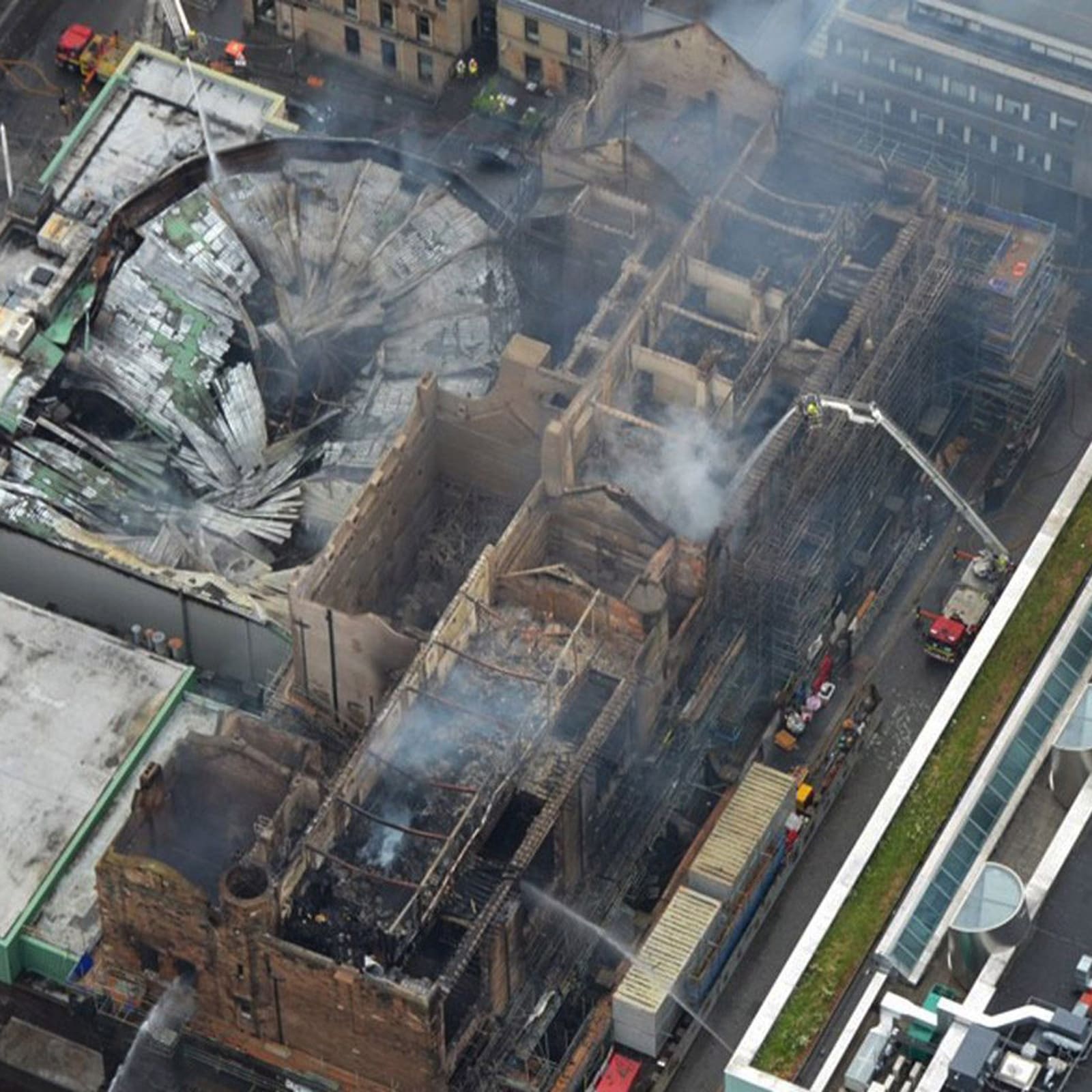
Between 2014 and 2018, the world watched the Mackintosh Building suffer two catastrophic fires. What disappeared in those flames was not simply a teaching facility or historic structure, but an architectural synthesis that had shaped Glasgow's creative identity for more than a century. The building represented something beyond preservation for its own sake: it stood as the fullest realization of The Glasgow Style, where Charles Rennie Mackintosh and his collaborators dissolved the boundaries between architecture, craft, and art into a unified vision.
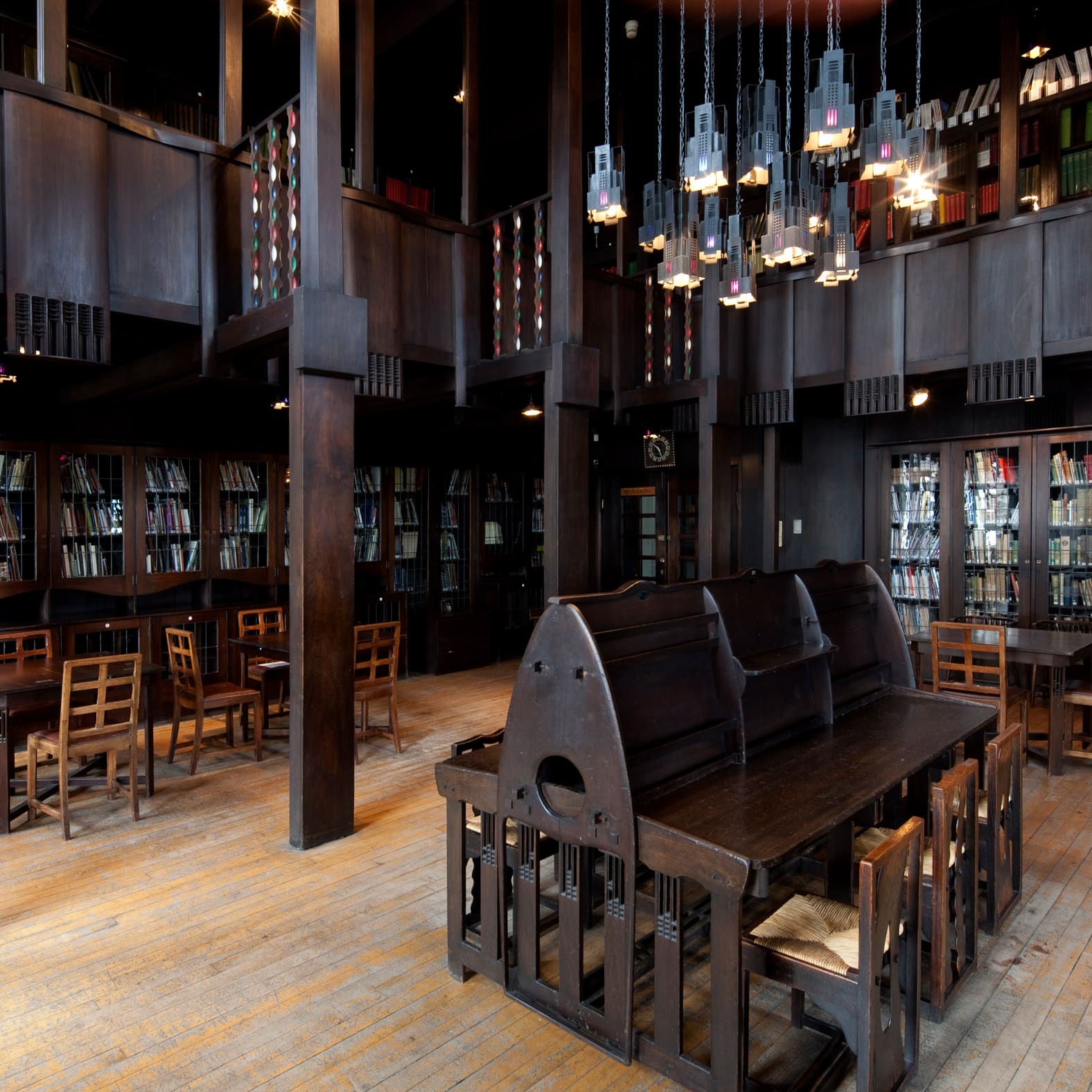
After the first fire, meticulous reconstruction of the library demonstrated that faithful reinstatement was achievable. The restored interior offered not mere replication but genuine renewal, proof that lost spatial qualities could be recovered through disciplined craftsmanship and deep understanding of Mackintosh's design language. Then came the second fire in 2018, and with it, a protracted silence.
The institution has now declared it cannot afford faithful reconstruction on its own. Yet the language surrounding this admission raises more questions than it answers. References to "heritage anchors" and "creative innovation clusters" suggest a framework in which the building's cultural significance becomes subordinate to economic development strategy. This shift in rhetoric demands scrutiny.
A Question of Stewardship
Stewardship of cultural monuments carries obligations that extend beyond institutional convenience. The Mackintosh Building embodies more than functional space for art education; it stands among Scotland's most significant cultural achievements, comparable in importance to illuminated manuscripts and medieval artifacts. Its significance derives from Mackintosh's integration of structure, light, material, and detail into an indivisible whole. Every door handle, every stained-glass panel, every spatial relationship contributes to an artistic idea that cannot be separated from its physical form.
Proposals to retain only the surviving shell while inserting contemporary interiors fundamentally misread this achievement. The building's value lies not in its facade but in the complete spatial experience Mackintosh conceived. We have seen how bold contemporary intervention can protect historic fabric without compromising it; the rescue of Mackintosh's Hill House through inventive protective architecture demonstrates that conservation and imagination can coexist. But that approach serves a different purpose than wholesale interior replacement.
The institution's recent statement suggests it now "thrives" without the building, a curious claim in a document meant to generate support for reconstruction. If an art school can flourish without the structure that once defined its identity, what argument remains for that school to retain ownership? The logic points toward separation, not partnership.
The Problem with Interpretation
Among the proposals under consideration is the creation of "museum-standard interpretations" alongside retained building fragments. This language reveals a category error. The experience of moving through Mackintosh's carefully modulated spaces, of understanding how light transforms throughout the day, of reading the relationship between structure and ornament, cannot be substituted by interpretation. A museum display about the building is not the building. Photographs, models, and explanatory text may educate, but they cannot replace the embodied knowledge that comes from inhabiting architectural space.
At World Archi Design, we have tracked numerous reconstruction projects across Europe and Asia. The distinction between authentic reconstruction and interpretive substitution matters profoundly. Notre-Dame in Paris will be rebuilt because the French state recognizes that certain monuments must be preserved in their fullness, not merely commemorated. The Mackintosh Building deserves the same commitment, not because other nations reconstruct their monuments, but because it represents a pinnacle of Scottish cultural achievement.
The Financial Opacity
Eight years after the first fire, fundamental questions about financing remain unanswered. The insurance settlement is reportedly insufficient to fund complete reconstruction, yet no public accounting explains the gap between compensation and cost. A failed architecture competition, multiple changes in preferred bidders, and an abandoned procurement process suggest deeper institutional difficulties. These are not merely procedural matters; they speak to capacity and resolve.
The institution claims it lacks the expertise to undertake faithful reconstruction, despite having demonstrated precisely that capability after the first fire. Page\Park's guidance proved that even the library, the most delicate component, could be recreated. If that work was possible once, why not again? The answer may lie not in technical capacity but in institutional will.
Toward a National Trust Model
The path forward requires acknowledging an uncomfortable truth: the building has outgrown the institution it was designed to serve. This does not diminish the school's historic importance or its current educational mission. It simply recognizes that stewardship of a monument of this significance may exceed the capacity of any single institution, particularly one facing its own operational and financial pressures.
Transfer of ownership to a dedicated national trust would separate the building's preservation from the school's institutional priorities. Such a trust could focus exclusively on faithful reconstruction, drawing on expertise across conservation, craft, and architectural history. Funding would come from public sources, private philanthropy, and heritage organizations, freed from the constraints of a school budget. The institution could remain closely involved as a key stakeholder and eventual occupant, but without bearing sole responsibility for a project of this magnitude and complexity.
This model has precedent. Across Britain and Europe, trusts manage historic properties that have separated from their original institutional contexts. The arrangement allows specialized stewardship while preserving meaningful connections to founding institutions. For the Mackintosh Building, such a structure would provide the focus, resources, and independence necessary for reconstruction at the standard the building deserves.
What Faithful Reconstruction Means
Faithful reinstatement is not an exercise in nostalgia or a rejection of contemporary architecture. It is a demonstration of what can be achieved when conservation, craftsmanship, and architectural understanding converge. The work would require research into original construction methods, sourcing of appropriate materials, and training of craftspeople in techniques that have largely disappeared. It would become, in itself, a project of cultural renewal.
The reconstruction would also establish a model for how Scotland approaches its built heritage. Every decision about materials, detailing, and spatial relationships would need to balance historical accuracy with contemporary building standards. This is complex work, but it is work that the conservation field has undertaken successfully in other contexts. The reconstructed library, before the second fire, proved that such work was possible. Completing it for the entire building would reaffirm the value Scotland places on its cultural legacy.
Beyond Economic Justification
Perhaps the most troubling aspect of recent statements is the emphasis on economic regeneration and innovation clusters. These may be legitimate urban planning goals, but they should not drive decisions about a building of this importance. Great works of architecture are preserved because they embody cultural values that transcend economic calculation. The Mackintosh Building should be rebuilt because it represents a singular achievement in spatial design, material craft, and architectural imagination. Its reconstruction would honor the skill and vision of its creator, the craftspeople who built it, and the cultural tradition it represents.
Regeneration may follow from reconstruction, but it cannot be the purpose. When economic utility becomes the primary lens through which we view cultural monuments, we have already conceded too much. The building's value lies in what it is, not in what it might generate.
The Mandate Exhausted
Two fires, years of delay, a collapsed procurement process, an unexplained insurance shortfall, and a public admission that the institution cannot deliver faithful reconstruction have eroded confidence. This is not an indictment of individuals or a dismissal of the school's contributions to art education. It is a recognition that circumstances have changed. The building requires stewardship that can focus exclusively on its preservation and reconstruction, without the competing demands that inevitably face an operating educational institution.
The time has come for the school to acknowledge what its own statement implies: that it can thrive without the building, and that the building now requires something the school cannot provide alone. Transferring ownership to a national trust would not represent failure but wisdom, an acknowledgment that great monuments sometimes outgrow their original contexts and require new forms of care.
Glasgow's secular church, the place where belief in creativity and making found architectural expression, deserves to be rebuilt in full. But that rebuilding should rest with those whose sole mandate is preservation, whose resources are dedicated to that purpose, and whose accountability runs to the building itself rather than to institutional priorities that may shift over time. The Mackintosh Building should be reconstructed without the Glasgow School of Art holding the keys, though with the school as a valued partner in its future life. Stewardship is not ownership; it is responsibility. And sometimes, the most responsible act is to pass that stewardship to others better positioned to fulfill it.
Credit: Glasgow School of Art
Save this story. A free account keeps your reading list and the 07:00 email in one place.
CREATE FREE ACCOUNT →SIGN IN