The Problem With Beauty in Contemporary Practice
Architecture has spent the better part of a century oscillating between two extremes: treating beauty as either superfluous decoration or as an unspoken given, too subjective to articulate. The modernist project largely banished ornament in favor of function; postmodernism reintroduced it as ironic commentary. What rarely emerges is a practice that places aesthetic experience at the center of spatial organization without apology or pastiche.
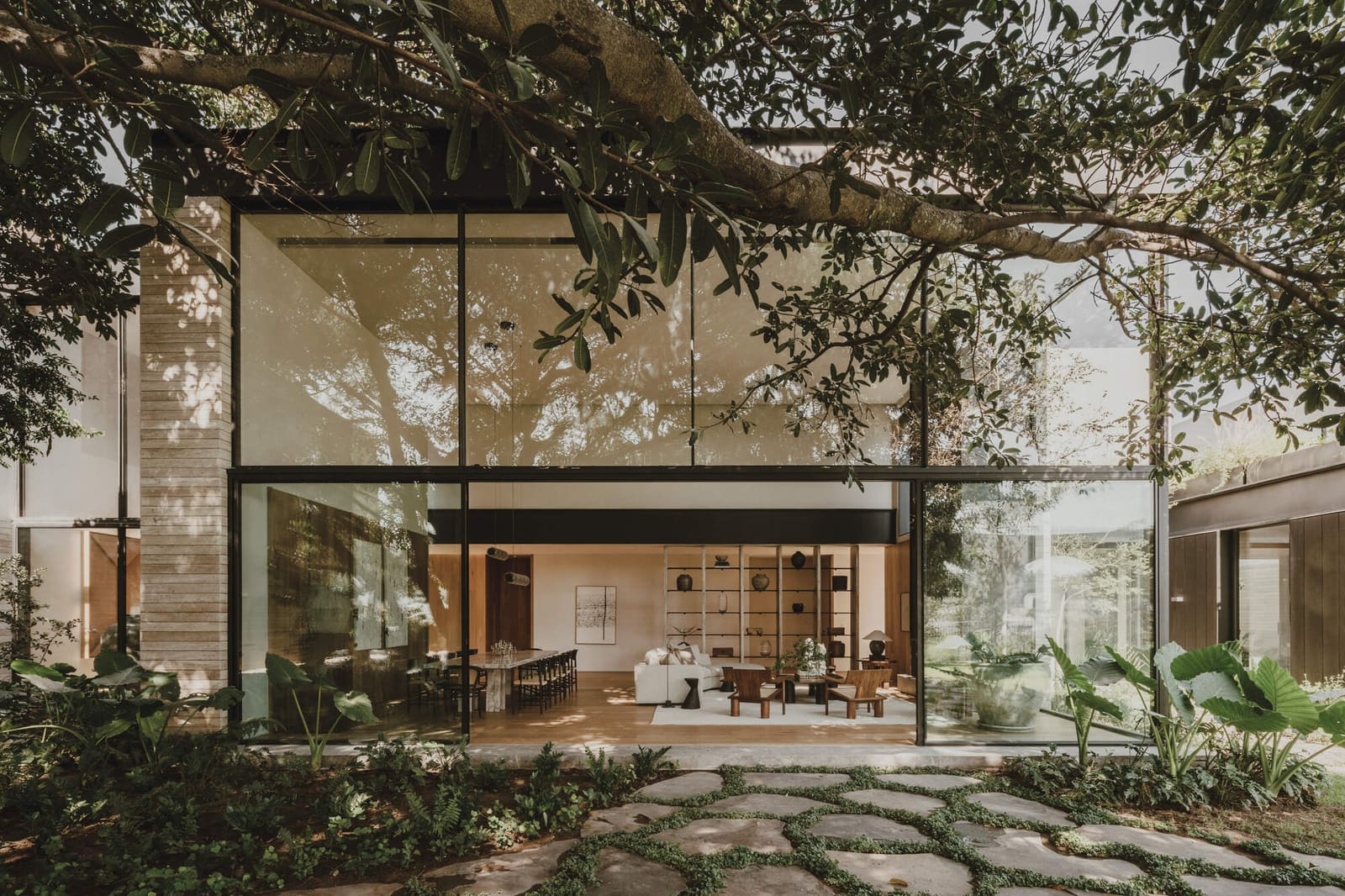
Casa CO, completed in 2025 by JDEstudio with interiors developed by Aagnes Studio, proposes a different approach. Spanning 1,600 square meters in Guadalajara, the residence positions beauty not as surface treatment but as the conceptual armature around which all other decisions orbit. It asks: what happens when the pursuit of aesthetic coherence becomes the primary generator of architectural form?
Beauty as Organizing Principle
The house operates on a thesis that will sound almost heretical to those trained in the functionalist tradition: that beauty can function as an ordering device as rigorous as program, circulation, or structure. This is not beauty in the decorative sense, applied after the fact to soften or embellish. Instead, it operates as a kind of pre-rational filter through which every spatial and material choice must pass.
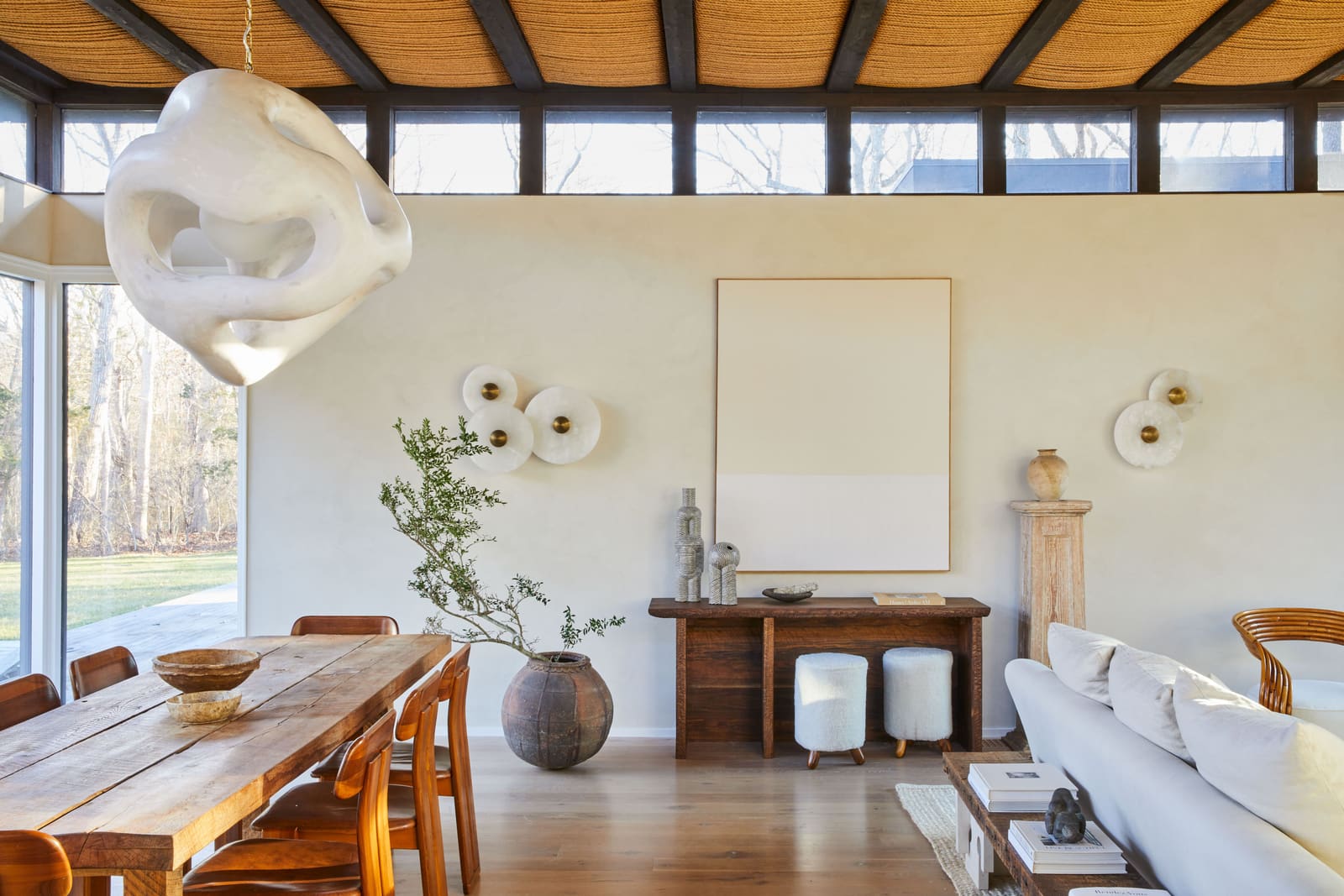
In practice, this manifests as a heightened attention to proportion, light modulation, and the choreography of thresholds. Rooms are sized not merely to accommodate furniture or meet code, but to achieve a particular quality of enclosure. Ceiling heights shift to modulate intimacy and grandeur. Windows are positioned to frame views as compositional exercises, balancing solid and void with the precision of a painter arranging figure and ground.
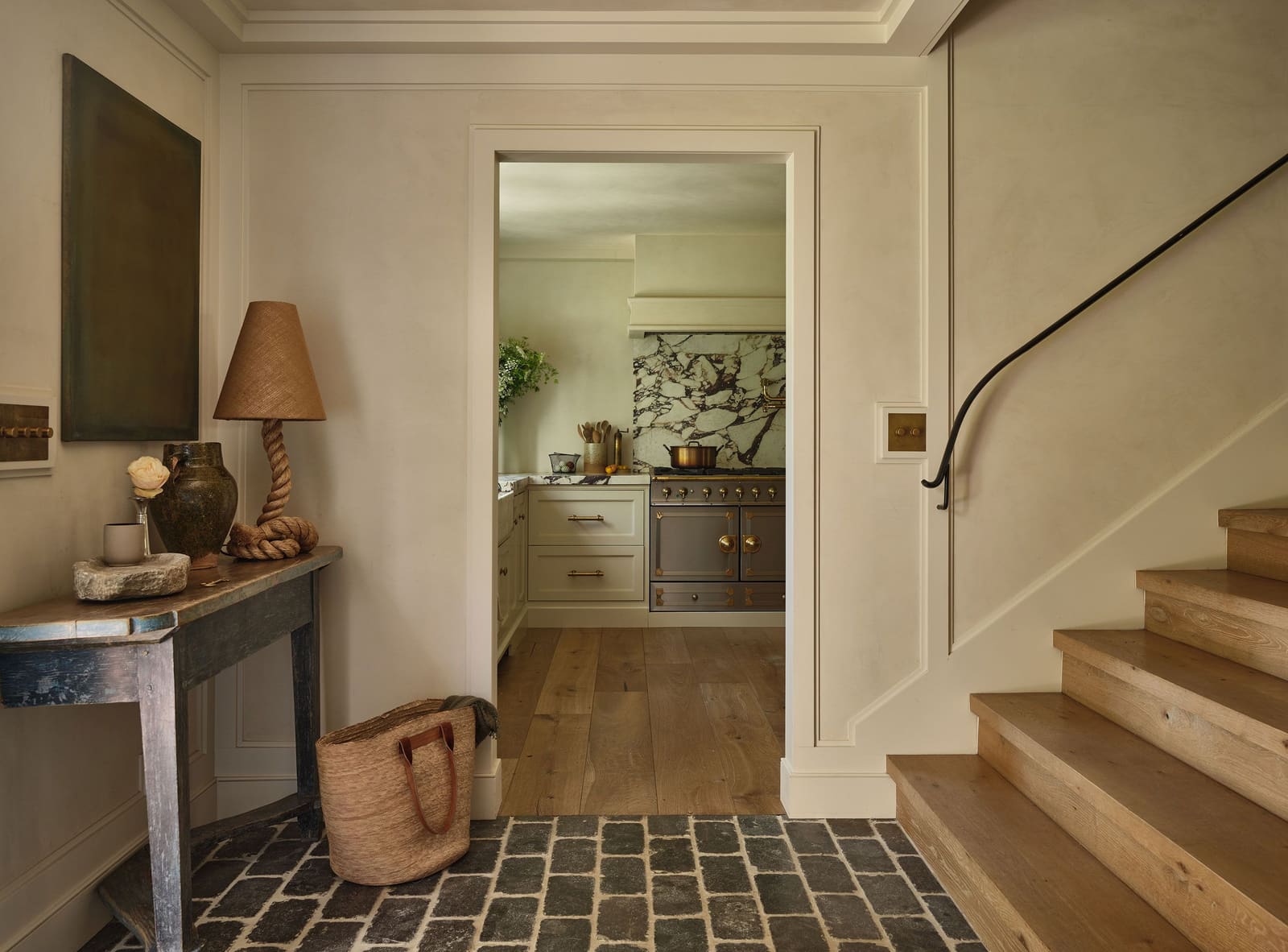
The interiors, developed by Aagnes Studio, extend this logic into the realm of tactility and finish. Materials are selected for their capacity to register light and time: plaster that softens edges, stone that anchors weight, wood that warms without sentimentality. The palette is restrained, but not austere. There is an evident pleasure in surface quality, in the way a wall meets a floor, in the thickness of a threshold.
Precedent and Departure
The conceptual lineage here runs through a particular strand of twentieth-century thought, one that includes figures like Luis Barragán and Carlo Scarpa. Both architects understood that emotional resonance could be engineered through geometry, color, and the orchestration of procession. Barragán's houses in Mexico City famously deployed saturated hues and water as devices to heighten perception; Scarpa's interiors for the Castelvecchio Museum in Verona treated joinery and materiality as a form of argument.
Casa CO shares this commitment to architecture as an experiential discipline, but diverges in its explicitness. Where Barragán cloaked his intentions in mysticism and Scarpa in craft, JDEstudio and Aagnes Studio articulate beauty as an intellectual project. The house does not rely on regional vernacular or historical reference to justify its aesthetic ambitions. It simply asserts that the organization of space can and should prioritize perceptual delight.
This directness is both the project's strength and its vulnerability. Without the buffer of tradition or theory, the work must succeed entirely on its own terms. A poorly judged proportion or an awkward transition becomes immediately legible. The stakes are high.
Materiality and Light
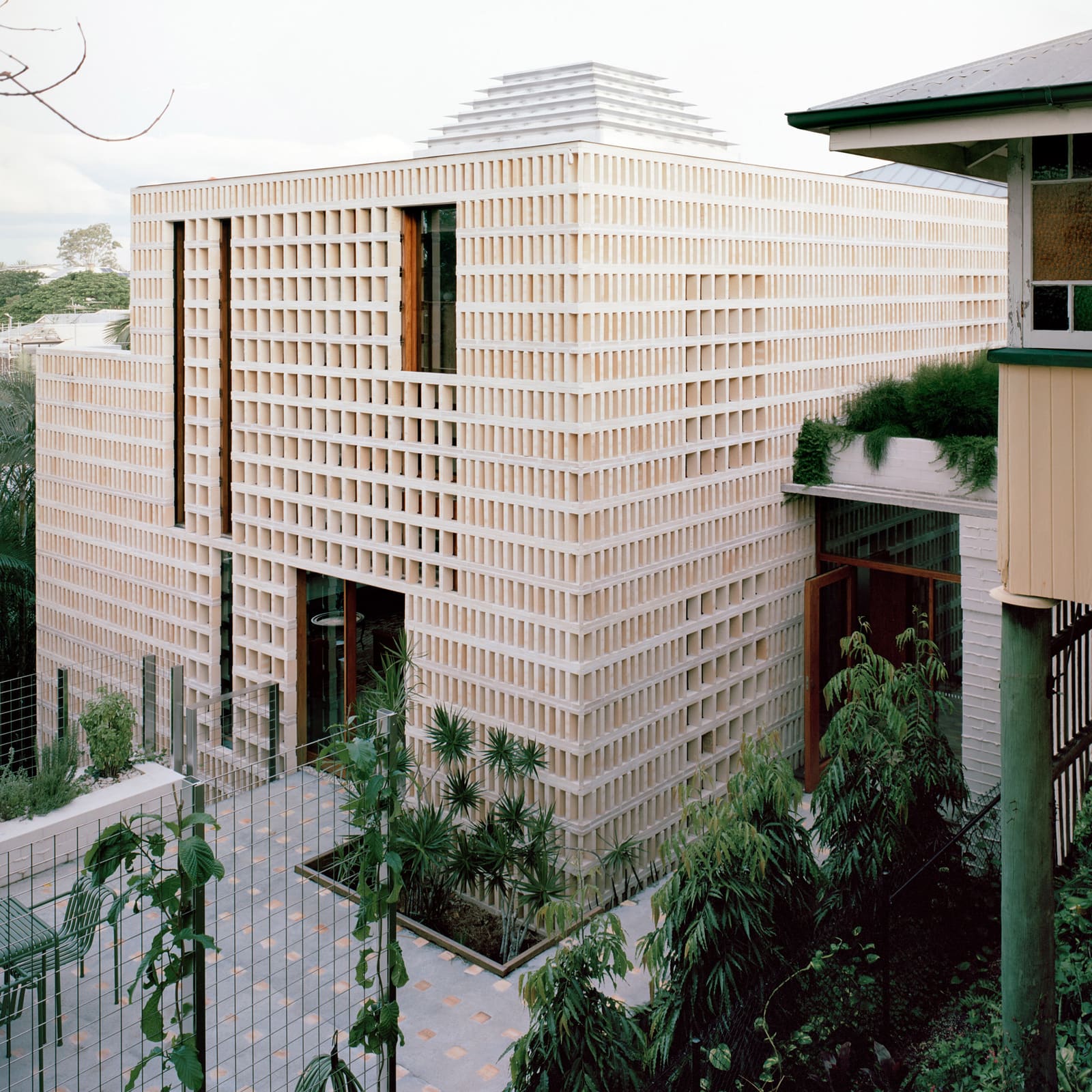
The envelope is composed of stucco and stone, materials chosen less for their thermal performance or cost efficiency than for their capacity to hold light. The stucco is applied in thick layers, creating depth at edges and reveals. Shadows become sculptural elements, shifting throughout the day to animate surfaces that might otherwise read as static.
Stone appears sparingly, deployed at moments of structural or perceptual emphasis: a plinth, a fireplace surround, a boundary wall. Its mass provides counterpoint to the relative lightness of the stucco, grounding the composition without overwhelming it.
Inside, the material palette narrows further. Floors are poured concrete or wide-plank timber, both left largely unadorned. Walls are either plastered smooth or paneled in natural wood. The restraint is deliberate, creating a neutral field against which the play of light and proportion can register more clearly.
Illumination, handled by Artefaux, operates as both functional necessity and spatial tool. Fixtures are recessed or minimally detailed, avoiding the tendency to treat lighting as jewelry. Instead, the focus is on ambient quality: the way light pools in a corner, the gradient from bright to dim across a wall, the interplay between natural and artificial sources as day transitions to evening.
Landscape as Extension
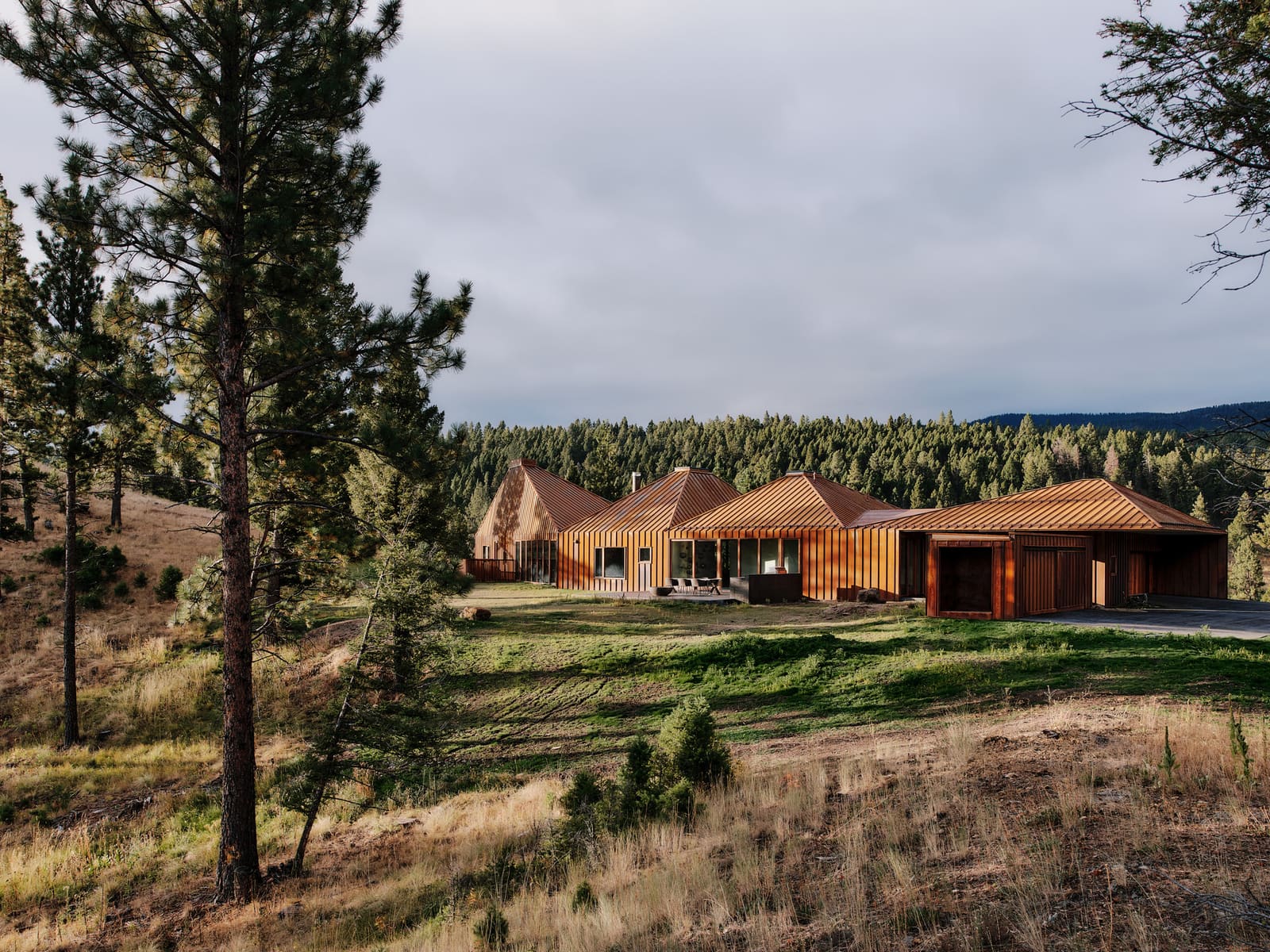
The landscape, designed by Marie-Sant, does not function as a separate domain but as a continuation of the house's spatial logic. Gardens are structured as outdoor rooms, with hedges and walls defining enclosure. Planting is restrained, emphasizing form and texture over color. Water features are geometric, reflecting sky and architecture rather than mimicking natural streams.
This approach aligns with the broader project: the landscape is not an escape from the built environment but an extension of its aesthetic and spatial principles. The boundary between inside and outside is porous, mediated by terraces, courtyards, and glazed openings that frame views with deliberate care.
The Risk of Aestheticism
Projects like Casa CO inevitably invite critique for privileging aesthetics over other concerns: sustainability, affordability, social equity. These are legitimate questions. A house designed primarily around the pursuit of beauty will, by definition, allocate resources differently than one optimized for energy performance or material efficiency.
Yet the counterargument is worth entertaining: that architecture's capacity to shape experience, to elevate daily life through spatial and material refinement, is itself a form of value. Not every project can or should prioritize beauty above all else. But in a discipline increasingly dominated by parametric optimization and regulatory compliance, there is something to be said for work that unapologetically centers perceptual delight.
The danger, of course, is that such an approach can tip into indulgence or irrelevance, producing spaces that satisfy the architect's formal ambitions while failing to serve the people who inhabit them. Casa CO avoids this pitfall, at least in part, by maintaining a clear relationship between aesthetic intention and lived experience. The spaces are not merely beautiful in the abstract; they are shaped to support specific rituals of domesticity, from cooking to conversation to solitude.
Toward an Aesthetic Practice
At World Archi Design, we have been tracking a quiet shift in how younger practices articulate their intentions. There is a growing willingness to speak directly about beauty, to claim it as a legitimate architectural ambition rather than a byproduct of other, ostensibly more serious concerns. This is not a return to Beaux-Arts formalism or the excesses of postmodernism, but something more grounded: an acknowledgment that architecture's power resides, in part, in its capacity to move us.
Casa CO participates in this conversation by offering a built argument. It proposes that beauty, rigorously pursued, can function as a generative constraint, shaping decisions about scale, proportion, material, and light. The result is a residence that feels both intentional and inhabitable, demonstrating that aesthetic ambition need not come at the expense of spatial coherence or domestic comfort.
Whether this approach can scale beyond the single-family house, with its relative freedom from economic and programmatic constraints, remains an open question. But as a provocation, the project succeeds. It reminds us that architecture, at its best, is not merely the solution to a problem but the creation of an experience, one that engages reason and spirit in equal measure.
Photo: Luis Garvan
Save this story. A free account keeps your reading list and the 07:00 email in one place.
CREATE FREE ACCOUNT →SIGN IN