The Economics of Memory
Preservation has always been expensive. A building ages, systems fail, and the cost of maintaining historic fabric inevitably collides with the logic of new construction. Yet across the United States, a series of recent controversies suggests something more complex is at work: a fundamental reckoning with which structures deserve protection, who gets to decide, and what happens when architectural significance meets political will or private ambition.
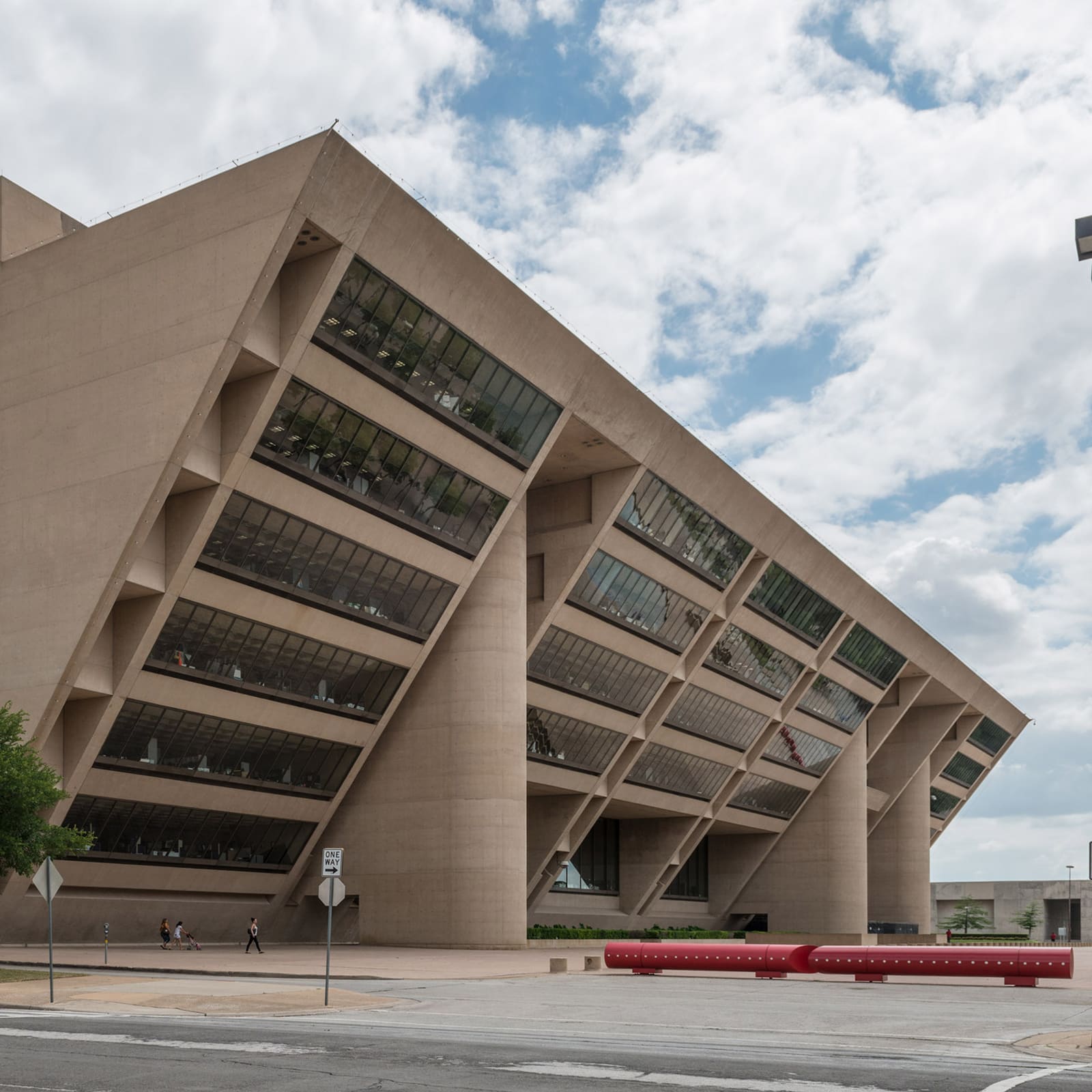
Consider the fate of IM Pei's Dallas City Hall, a brutalist landmark from the 1970s now under threat as local government explores relocation. The council remains divided, but the calculus is familiar. Maintenance costs mount, functional demands evolve, and the building's aesthetic, once celebrated, becomes a liability in the eyes of budget-conscious officials. This is not simply a question of preservation versus pragmatism. It is a test of whether mid-century modernism, and brutalism in particular, can command the same reverence afforded to older typologies.
At World Archi Design, we have tracked similar debates around other concrete monuments: the fate of these structures often hinges less on their architectural merit than on public perception and political expediency. Pei's civic building, with its cantilevered mass and bold geometry, represents an era of optimism about public infrastructure. Its potential abandonment would signal a retreat from that vision.
When Renovation Becomes Erasure
The boundary between adaptive reuse and destruction can be surprisingly narrow. Musician Ye's intervention into a Malibu residence by Tadao Ando offers a cautionary tale. The project, originally conceived as a serene coastal dwelling with Ando's signature use of cast-in-place concrete and carefully calibrated natural light, was gutted in an attempt to create what was described as a bunker. The structure now sits stripped, struggling to find a buyer before foreclosure.
Ando's work relies on a delicate interplay of material, light, and spatial sequence. Remove the fenestration, alter the interior volumes, and what remains is little more than a concrete shell, a tectonic skeleton divorced from its original parti. The case raises uncomfortable questions about ownership and stewardship. Does the purchase of a significant work of architecture confer the right to fundamentally alter it, or does the building's cultural value impose obligations on its owner?
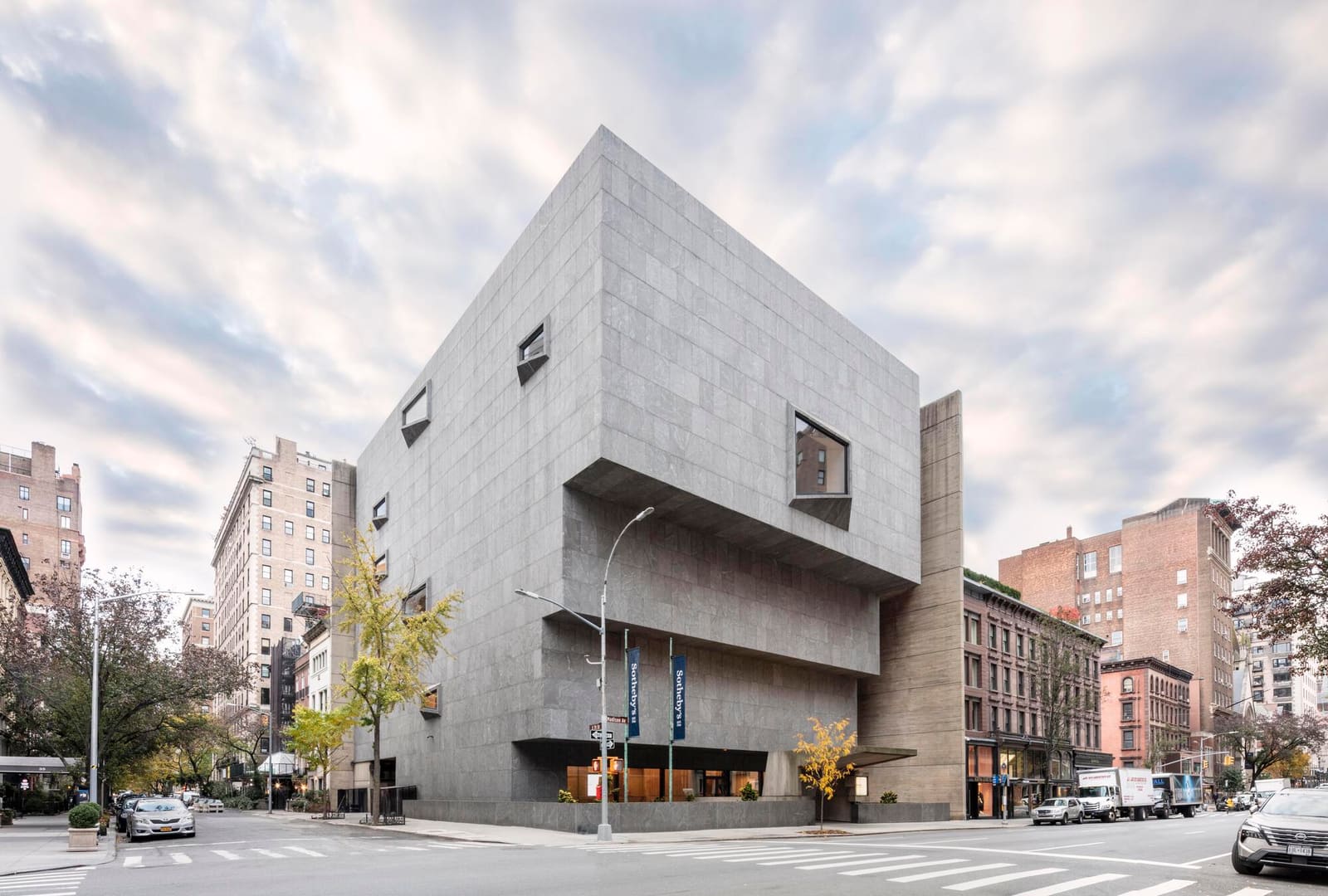
Similar tensions played out, though with a more favorable outcome, in the renovation of Philip Johnson and John Burgee's 550 Madison skyscraper in New York. Snøhetta's initial proposal called for a glass intervention at the building's base, a move that would have radically transformed the postmodern tower's street presence. After the structure received landmark status, the design was revised to preserve the facade in its entirety. The completed renovation, finished in 2022, demonstrates that contemporary intervention and preservation need not be mutually exclusive, provided that the original architectural language is respected.
Postmodern Precedents and Their Fragile Status
Michael Graves' Portland Municipal Services Building offers a useful precedent. When demolition loomed in 2014, the fight to save it became a test case for postmodern preservation. Graves himself advocated for the structure, and the city ultimately chose renovation over replacement. The building reopened in 2020, its colorful facade and theatrical massing intact.
The Portland case is instructive because it established that postmodernism, often dismissed or derided, merits protection. Yet the logic that saved Graves' building has not been universally applied. The Vaillancourt Fountain in San Francisco, a sculptural brutalist work by Armand Vaillancourt, was deemed a hazard and dismantled despite local opposition. During the removal process, the fountain briefly caught fire, a symbolic end to a contentious chapter. The decision to demolish reflects a recurring pattern: public art and architecture that challenges conventional aesthetics often struggle to secure institutional support.
Political Interference and Institutional Integrity
The most troubling preservation battles involve not market forces or maintenance costs, but direct political intervention. The demolition of the White House East Wing in October 2025, ordered to make way for a grand ballroom, proceeded despite legal challenges and preservationist objections. Construction reportedly includes an expansive underground security complex, raising questions about the scope and legality of alterations to a building of such national significance.
Equally contentious is the ongoing dispute over the Kennedy Center in Washington, designed by Edward Durell Stone. Leadership was ousted, and proposals for an exterior overhaul emerged, along with the temporary addition of signage bearing the president's name. The American Institute of Architects joined a lawsuit challenging the federal government's authority to alter the building, arguing that such changes violate both preservation standards and the original design intent.
These cases reveal a troubling precedent: when political power overrides established regulatory processes, the mechanisms designed to protect significant architecture become ineffective. The Kennedy Center, with its clean travertine facades and grand foyer, represents a specific vision of civic monumentality. Its alteration, driven by executive preference rather than functional necessity or scholarly consensus, undermines the principle that certain buildings belong not to any individual administration but to the public.
The Role of Advocacy and Grassroots Mobilization
Not all preservation battles end in defeat. Victor Lundy's personal residence in Houston, Texas, was saved from demolition late last year through the coordinated efforts of multiple organizations, including the Texas Historical Foundation and Preservation Houston. New owners Dan and Carol Price purchased the property with plans to restore it, demonstrating that private buyers, when aligned with preservation goals, can succeed where public institutions hesitate.
Similarly, Frank Lloyd Wright's Price Tower in Oklahoma, his only realized skyscraper, emerged from a contentious legal dispute when a new owner acquired the building in March 2026 with plans to operate it as a hotel with residences, a rooftop bar, and ground-floor restaurant. The resolution followed litigation over the unapproved sale of original furniture, a reminder that preservation extends beyond the shell to include interiors, fixtures, and furnishings integral to the architect's vision.
Miami Marine Stadium, designed by Hilario Candela, remains in limbo. Closed since 1992, the structure has languished, covered in graffiti, its dramatic cantilevered roof overlooking the harbor. Conservation group Docomomo identified it as one of the most threatened buildings in America in 2022. Local voters are expected to approve an operator for the stadium in upcoming elections, a rare instance of preservation being decided through direct democratic process. The outcome will test whether public support can translate into the funding and political will necessary for restoration.
What Preservation Reveals About Value
The Elgin Mental Health Center Medical and Surgical Building outside Chicago, a circular structure by Bertrand Goldberg, has faced demolition threats after decades of disuse. Geoffrey Goldberg, son of the architect, has argued publicly that the building is worth preserving, yet no concrete timeline or funding mechanism has emerged. The building's uncertain fate reflects a broader challenge: structures associated with institutional histories, particularly mental health facilities, often carry stigma that complicates preservation efforts, regardless of their architectural significance.
Goldberg's work, characterized by expressive concrete forms and a humanistic approach to institutional design, deserves reconsideration. His Prentice Women's Hospital in Chicago was demolished in 2013 despite widespread protest, a loss that galvanized the preservation community but came too late to save the building. The Elgin structure represents a second chance to apply the lessons of that failure.
Looking Forward
The preservation battles unfolding across the United States are not isolated incidents but symptoms of a larger cultural moment. As the distance from mid-century modernism and postmodernism grows, the structures of those eras face heightened risk. Unlike Victorian or Beaux-Arts buildings, which benefited from historical distance and aesthetic rehabilitation, brutalist and postmodern works remain polarizing.
Yet the arguments for their preservation are compelling. These buildings document a specific set of ideas about form, material, and the role of architecture in public life. To demolish them is to erase not just structures but the debates and ambitions they embody. Preservation, in this sense, is not nostalgia but a commitment to maintaining a complex and sometimes uncomfortable architectural record.
The outcome of these battles will shape not only the physical landscape but also the precedents available to future preservationists. If political interference can override regulatory protections, if maintenance costs alone justify demolition, if private owners can gut significant works without consequence, then the concept of architectural heritage becomes hollow. The buildings at risk today are tests of whether preservation can function as more than rhetoric, whether the institutions and legal frameworks designed to protect the built environment can withstand economic pressure and political caprice.
What remains clear is that preservation is never neutral. Every decision to save or demolish a building reflects a judgment about what matters, whose history counts, and which visions of the future we are willing to inherit from the past.
Save this story. A free account keeps your reading list and the 07:00 email in one place.
CREATE FREE ACCOUNT →SIGN IN