The Threshold as Performance Space
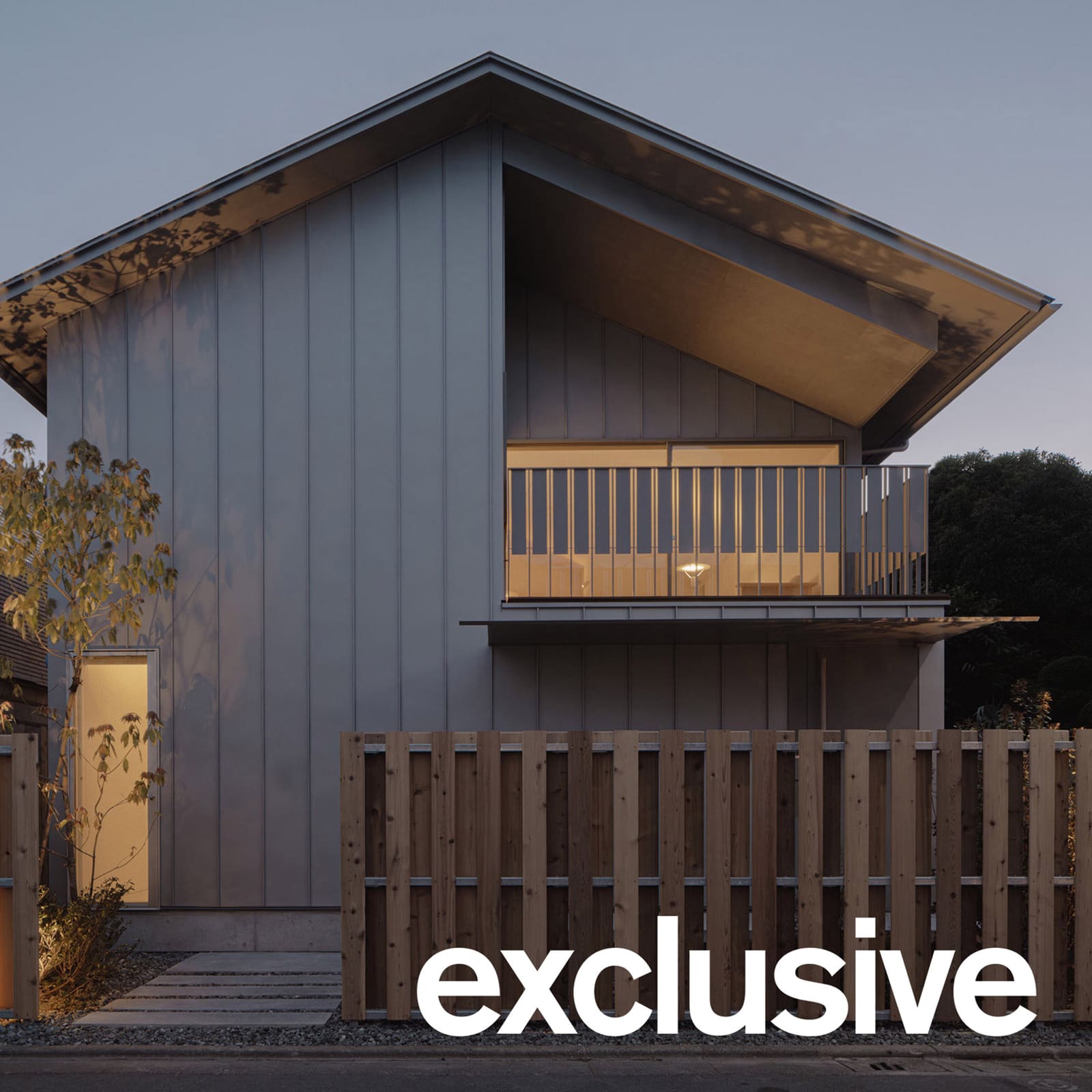
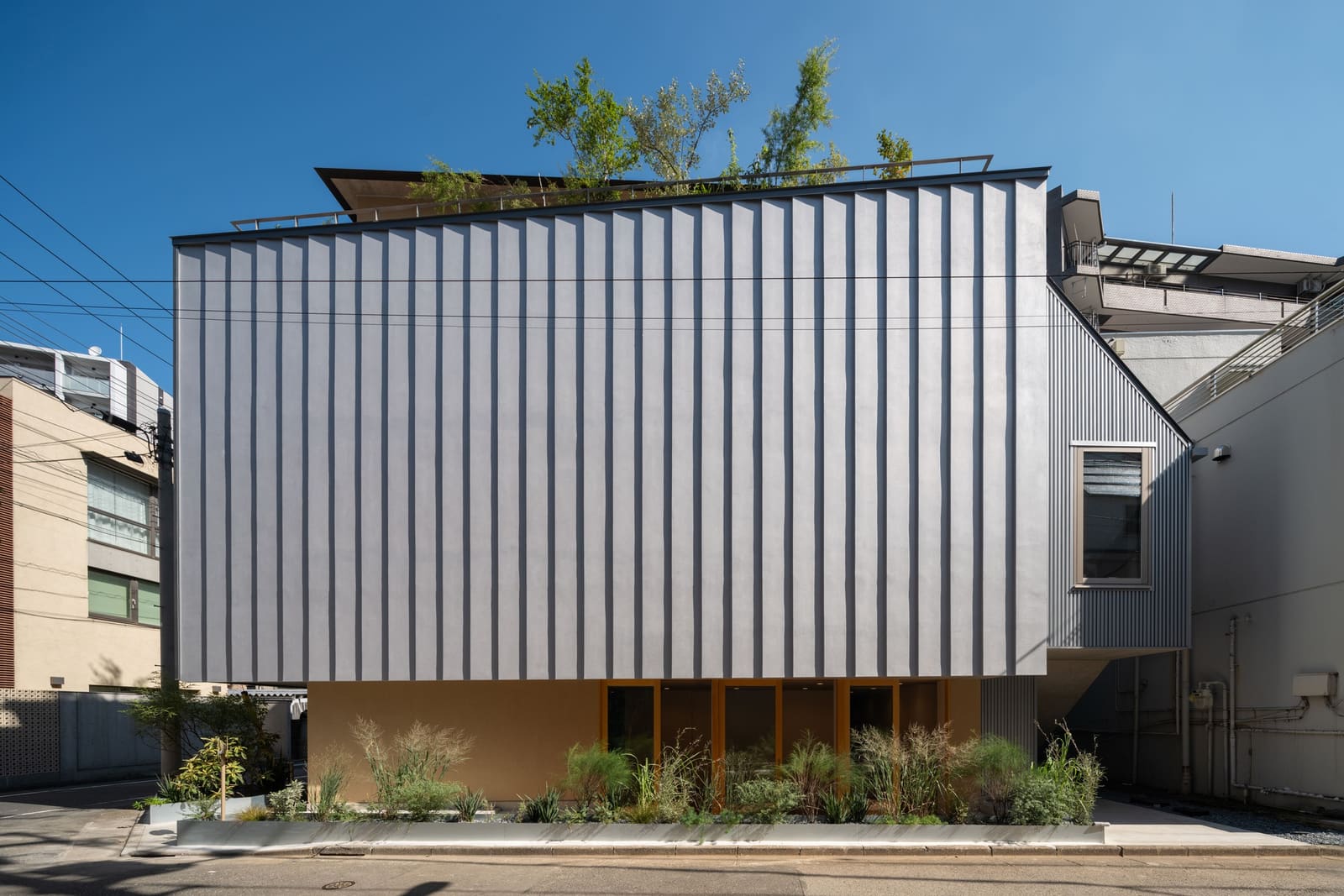
Most ballet studios turn inward. Mirrors multiply the dancer's form, walls absorb sound, and the world outside recedes behind heavy curtains. Kenta SANO & Associates took the opposite approach. In Toshima, Tokyo, the firm completed a 283-square-meter project in 2024 that treats the ballet hall not as a sequestered rehearsal chamber but as an open stage facing the street. Pedestrians become an accidental audience. The building holds both a ballet studio and a compact residence across four stories of steel framing, and its most provocative gesture is spatial: it refuses to hide the work of dance.
At World Archi Design, we've been tracking how hybrid-use buildings negotiate competing demands for privacy and display. This project offers a clear case study in selective transparency. The fenestration strategy prioritizes the studio volume, opening the hall to the sidewalk while the residential program recedes vertically. The result is a vertical zoning that aligns program with urban engagement, a move that recalls the street-level transparency of Renzo Piano's Fondation Jérôme Seydoux-Pathé in Paris, where the archive reading room similarly invites the gaze of the city.
Material Restraint and Structural Logic
The tectonic language is deliberately restrained. Steel framing allows for column-free spans within the studio, a functional requirement for uninterrupted movement and sightlines. The structural system, developed with yasuhirokaneda Structure, Beyond Engineering, and Glass Masters and Partners, prioritizes lateral bracing that does not intrude on the rehearsal floor. This is not novel engineering, but it is disciplined: the structure serves the program without calling attention to itself.
Exterior materialization emphasizes lightness. Large glazed panels dominate the studio facade, framed in minimal steel mullions. The cladding elsewhere is muted, likely a combination of metal panel and rendered surfaces, though the source material does not specify. What matters is the contrast: the studio reads as a luminous void, the residence as a solid mass. This binary reinforces the programmatic hierarchy and the building's urban posture.
Interior finishes, led by Yoko Ando Design, lean toward simplicity. Rehearsal spaces demand durability and acoustic control, and the material palette here appears to honor those constraints. Sprung flooring, sound-dampening treatments, and neutral wall surfaces form the backdrop for movement. Lighting design by Izumi Okayasu Lighting Design likely layers ambient and task illumination to support both daytime rehearsal and evening performance modes, though specifics remain undisclosed.
The Politics of Visibility
Opening a ballet studio to the street is not without precedent, but it remains a charged decision. Dance, especially classical ballet, has long been associated with exclusivity: expensive training, restricted access, elite institutions. By dissolving the facade between rehearsal and public space, Kenta SANO & Associates makes a quiet argument about accessibility. The passerby cannot enter, but they can witness. The building does not democratize ballet, but it does demystify it.
This strategy recalls the glass-walled gym at OMA's Maison à Bordeaux, where physical therapy became a visible part of domestic life, or the transparent ground floors of Herzog & de Meuron's Eberswalde Technical School Library, where reading rooms face the street. In each case, the act of revealing transforms the meaning of the space. The Tokyo Ballet House extends this logic to performance pedagogy, treating rehearsal as a form of public engagement.
There is also a practical dimension. Visibility can function as marketing. A studio that opens itself to the street advertises its presence without signage. Pedestrians who pause to watch may later enroll. The architecture serves both civic and commercial ends, a duality common in small-scale mixed-use projects where every square meter must justify its cost.
Urban Density and the Compact Residence
The residential component occupies the upper floors, a pragmatic stacking that allows the studio to claim the most accessible and visible volume. Toshima is one of Tokyo's 23 special wards, characterized by dense low-rise fabric and narrow lot frontages. The footprint here is constrained, and the vertical organization reflects that constraint. The residence is compact by necessity, not by choice.
This vertical separation of public and private program is a well-worn strategy in Japanese urbanism, seen in countless machiya-style townhouses where shops occupy the ground floor and living quarters rise above. Kenta SANO & Associates adapts this vernacular logic to a contemporary mixed-use typology, layering commercial cultural space with domestic life. The steel frame permits this stacking without excessive floor-to-floor heights, keeping the overall building profile low enough to fit within the neighborhood's scale.
The residence itself remains undescribed in available documentation, which suggests it is secondary to the project's conceptual ambitions. What we can infer is that it operates independently from the studio, with separate circulation and likely a discrete entrance. This functional autonomy is essential for a building that serves both a business and a household.
A Civic Gesture in Miniature
Small buildings rarely claim to reshape urban life, but they can propose alternate relationships between interior and exterior, between specialized use and public space. The Tokyo Ballet House does not revolutionize mixed-use architecture, but it does demonstrate how a single facade decision can reframe a building's role in its neighborhood. By turning the studio outward, the design invites a form of informal spectatorship that enriches the pedestrian experience without demanding participation.
This is architecture as invitation rather than proclamation. The building does not shout. It simply opens itself and allows the city to look in. Whether that gesture will inspire other dance studios, music schools, or rehearsal spaces to follow remains to be seen. But the precedent is now set: performance need not be hidden until it is polished. The work itself, visible and ongoing, can be the offering.
Precedent and Possibility
We might compare this project to Anne Lacaton and Jean-Philippe Vassal's Palais de Tokyo renovation, where raw, unfinished interiors were left exposed to signal that art-making is process, not just product. Or to Sou Fujimoto's House NA, where radical transparency collapses the distinction between domestic life and urban spectacle. The Tokyo Ballet House occupies a middle ground: it is transparent but not exhibitionist, open but not invasive.
The implications extend beyond ballet. Any discipline that relies on repetition, rehearsal, and incremental refinement could benefit from this model. Pottery studios, woodworking shops, recording studios, even architectural offices might reconsider the value of visibility. The risk, of course, is distraction. But the reward is connection, a sense that specialized work is not separate from the life of the city but woven into it.
Kenta SANO & Associates, with lead architect Kenta SANO and a design team including Sakutaro Kakehashi and Rena Yamamoto, has delivered a modest building with an outsized idea. The Tokyo Ballet House reminds us that architecture's most effective gestures are often the simplest: open the door, pull back the curtain, let the city in. What happens next is choreography.
Credit: Motoharu Yagi
Save this story. A free account keeps your reading list and the 07:00 email in one place.
CREATE FREE ACCOUNT →SIGN IN