There is a quiet paradox at the heart of every great city: the most valuable spaces are often the ones no one owns.
From a professional standpoint, much of architectural practice is centered on control - program, material, circulation, outcome. Yet the spaces that endure in collective memory are rarely the most controlled ones. They are the plazas that invite pause, the parks that absorb daily life, the streets that transform without permission. Public space is not residual. It is foundational.
The Invisible Infrastructure of Urban Life
Cities are typically measured through their tangible systems - transport networks, buildings, utilities. Public space, however, operates as an invisible infrastructure: one that supports social cohesion, cultural exchange, and everyday interaction.
Consider Bryant Park in New York. Once underused and perceived as unsafe, it has been reimagined through careful programming - movable chairs, seasonal events, open lawns - into a space that feels both curated and spontaneous. Its success lies not in monumental gestures, but in its adaptability to human behavior.

Photo Credit: Simon Menges
Similarly, Federation Square in Melbourne demonstrates how public space can anchor civic identity. Its fragmented geometry and open programming accommodate protests, screenings, festivals, and daily occupation, allowing the space to evolve with the city’s rhythms rather than dictate them.

Photo Credit: Melbournecb
These examples illustrate a key point: public space is not an accessory to urban life, it is where urban life becomes visible.
Designing with the Public, Not Just for Them
A defining shift in contemporary practice is the move toward participatory design, recognizing that the most resilient spaces are those shaped by the communities that use them.
Superkilen remains a compelling example. Rather than imposing a singular aesthetic, the project integrates objects and references from the diverse cultures of its surrounding neighborhood. The result is not a neutral park, but a layered and sometimes contradictory environment that reflects lived realities.

Photo Credit: Iwan Baan
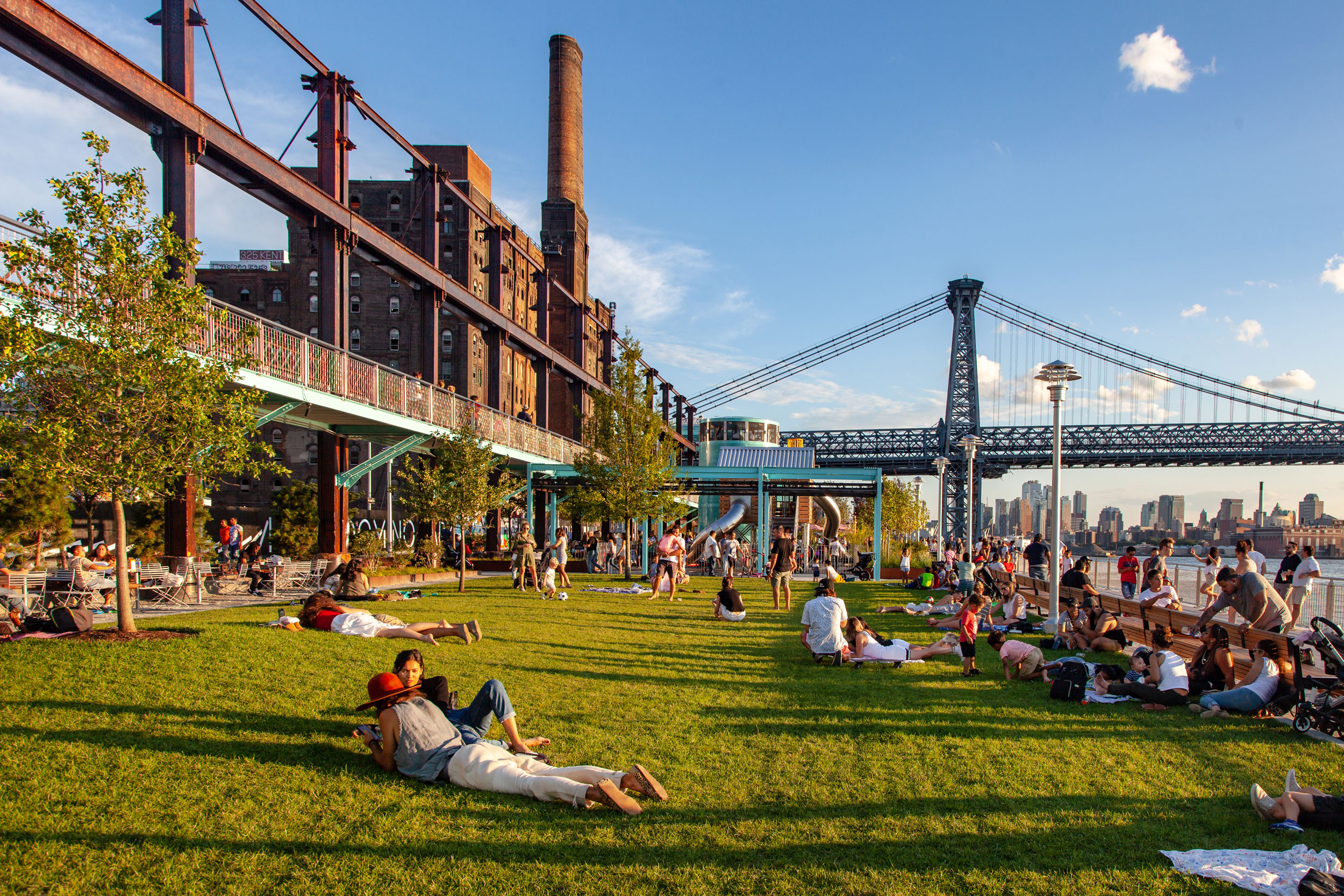
In a different context, Domino Park in New York City demonstrates how contemporary public space can embed memory, community, and program within a highly urban setting. Built on the site of a former sugar refinery, the park incorporates industrial artifacts into its design, transforming remnants of production into interactive and educational elements. At the same time, it provides open lawns, playgrounds, and flexible gathering spaces that support everyday use.

Photo Credit: Barrett Doherty
Designing public space, then, becomes less about authorship and more about facilitation, creating frameworks that allow meaning to emerge over time.
Reclaiming What Already Exists
Some of the most transformative public spaces are not built from scratch, but reclaimed from what cities have left behind.
The High Line is perhaps the most widely recognized example. A former freight rail line, it has been reimagined as a linear park that redefines movement through the city - slowing it down, elevating it, and reframing familiar views.

Photo Credit: Kalina Prelikj
In Seoullo 7017, a disused highway has been converted into a pedestrian garden, stitching together fragmented parts of the city while introducing ecological and social functions.

Photo Credit: MVRDV
These projects share a common strategy: they shift the perception of value. What was once obsolete becomes essential.
Beyond Metrics: The Emotional Value of Space
Public space is often justified through measurable outcomes - environmental performance, economic uplift, mobility. While these are critical, they do not fully capture its impact.
There is an emotional dimension to public space that resists quantification.
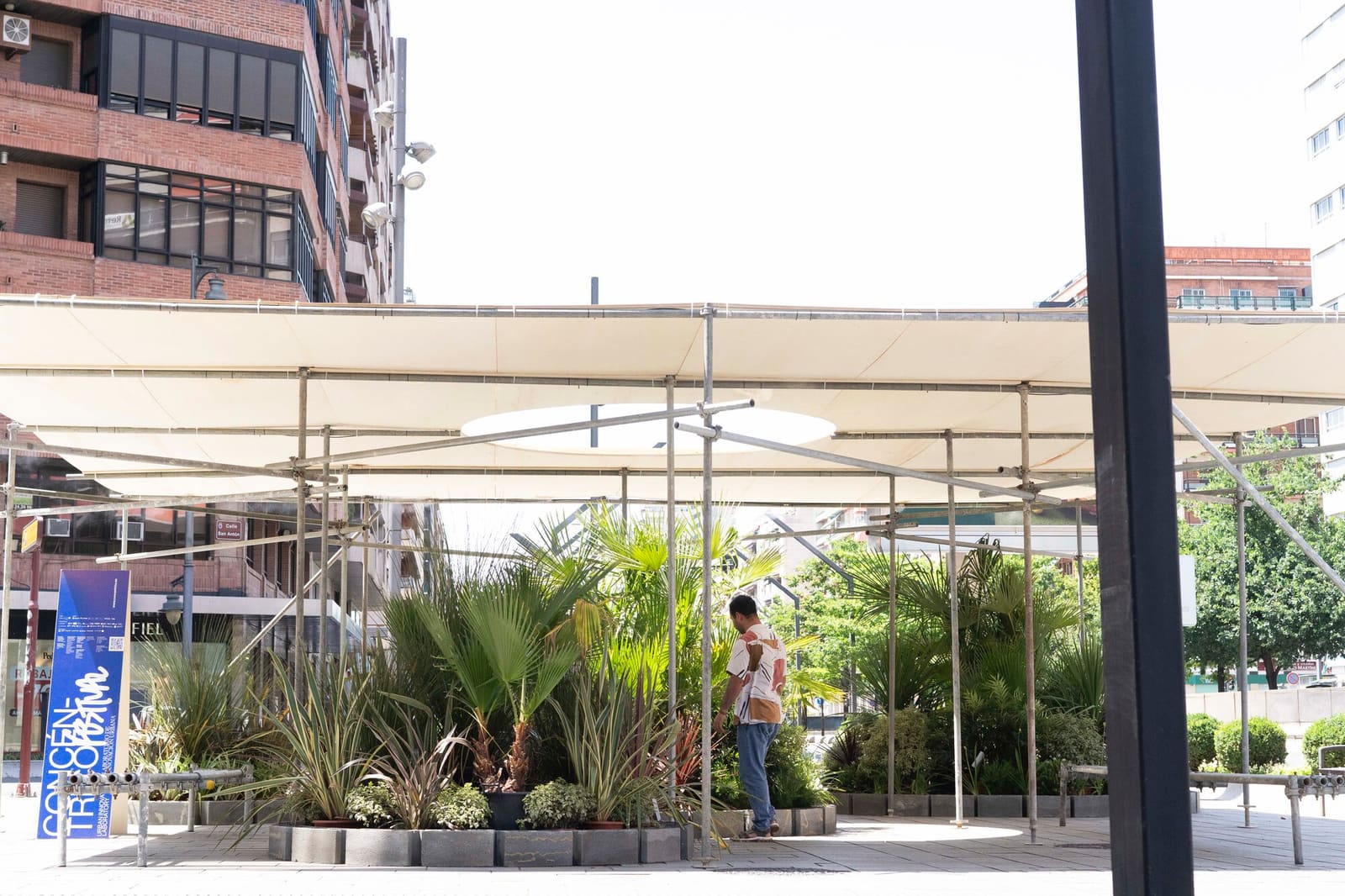
In Jardín Botánico de Medellín, the interplay of shaded structures, open lawns, and community use creates an atmosphere that encourages both gathering and solitude. It is not defined by a single function, but by its capacity to accommodate multiple states of being.

Photo Credit: CENTROS COMERCIALES VIVA
Likewise, Zaryadye Park combines landscape typologies with immersive viewpoints, offering experiences that oscillate between spectacle and introspection. Visitors are not directed toward a single narrative, they construct their own.

Photo Credit: Philippe Ruault
Such spaces succeed not only because they function well, but because they resonate. They accumulate memory, foster attachment, and become part of the city’s emotional fabric.
The Responsibility of Getting It Right
If public space is a city’s greatest asset, it is also one of its greatest responsibilities.
Missteps are not uncommon. Over-designed spaces can feel rigid and exclusionary. Over-commercialized environments risk prioritizing consumption over access. Even celebrated projects can contribute to rising property values and displacement, raising questions about who public space ultimately serves.
The challenge, then, is not only to design compelling spaces, but to ensure they remain open, inclusive, and adaptable over time.
Public space must remain genuinely public - accessible across social, economic, and cultural boundaries.
Reading the City Through Its Spaces
A useful way to understand any city is to observe its public spaces. Not its landmarks, but its everyday environments.
Piazza del Campo reveals how centuries-old design can still support contemporary life, its sloped surface continuously occupied by residents and visitors alike.
Trafalgar Square demonstrates how symbolic space can double as a site for civic expression and gathering.
Champs-Élysées shows how even highly commercialized corridors can function as shared urban stages.
In each case, the patterns of use - where people gather, linger, or move through - offer insights into the city’s character. Buildings may define skylines, but public space defines experience.
Conclusion
In an era increasingly shaped by privatization, digital mediation, and controlled environments, public space remains one of the few domains where life unfolds collectively and unpredictably. It is where difference becomes visible, where community is negotiated, and where the city is continuously remade through use.
That is what makes public space the greatest asset any city possesses - not its permanence, but its openness. Not its form, but its capacity to be shared. And that is precisely why it must be designed, protected, and reimagined with care.
Save this story. A free account keeps your reading list and the 07:00 email in one place.
CREATE FREE ACCOUNT →SIGN IN