The Floor as Anchor
We've long been conditioned to treat walls as the primary real estate for visual interest: a gallery wall here, an overscale canvas there. But the floor, that vast horizontal plane we walk across without ceremony, often does the heavier lifting in defining how a room feels. A textile underfoot has the capacity to soften acoustics, delineate zones, and establish a tonal baseline that furniture, lighting, and even art respond to. Unlike a painting, which commands attention from a fixed vantage point, a rug operates in the periphery of daily movement, a constant tactile presence that shapes the room's emotional register.
Little Wing Lee, founder of Studio & Projects, has built her practice around this premise. Her latest work for Design Within Reach, the Semita collection, treats the floor not as background but as the room's gravitational core. Handcrafted in India using New Zealand wool, the rugs span round and rectangular formats, each one a study in how pattern, pile height, and light reflection can modulate spatial experience. The collection launched this year, expanding the furniture brand's portfolio into textiles that function as both utility and art object.
Constructivist Geometry Meets Kilim Craft
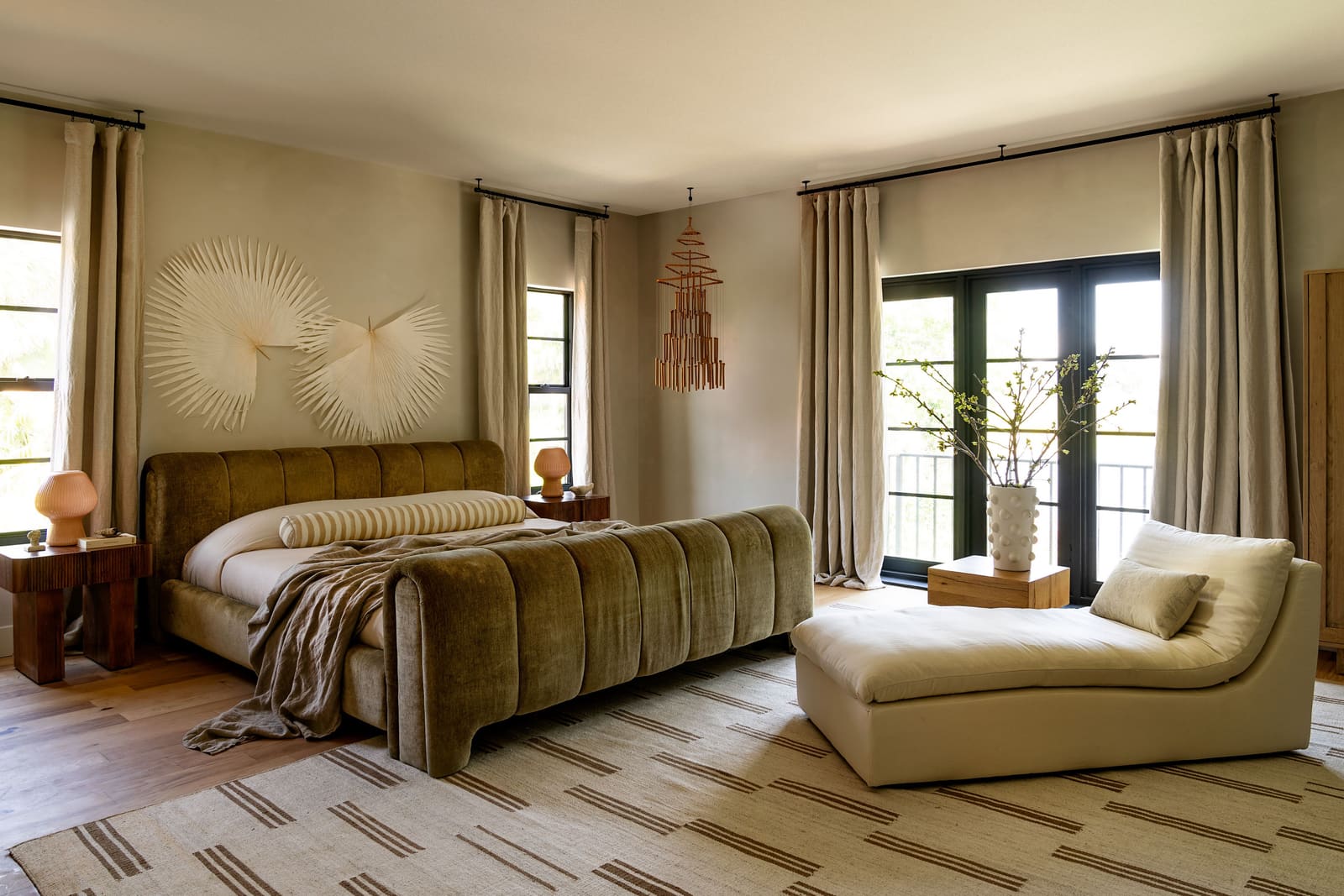
The Semita pattern draws from two seemingly divergent traditions. On one hand, Lee looked to kilims, those flat-woven textiles from Turkey and North Africa, known for their bold stripes and geometric clarity. On the other, she referenced constructivist painting, with its fractured planes and non-representational compositions. The result is a spiral motif built from scattered lines and angles, a design that reads as both orderly and improvisational. The word "semita" translates from Latin as "footpath" or "narrow pathway," and the pattern indeed suggests a maze-like quality, inviting the eye to trace routes across the surface.
Lee's childhood home featured a striped rug, a detail she has carried forward in her work. But rather than replicate that memory literally, she fragmented the stripe, breaking it into discontinuous segments that shift direction and density. The effect is kinetic without being busy, a balance that requires careful attention to scale and proportion. In constructivist work, the tension between elements creates visual energy; in a rug, that same tension must coexist with the need for the design to feel grounded, something you can live with underfoot for years.
Tactility as Design Language
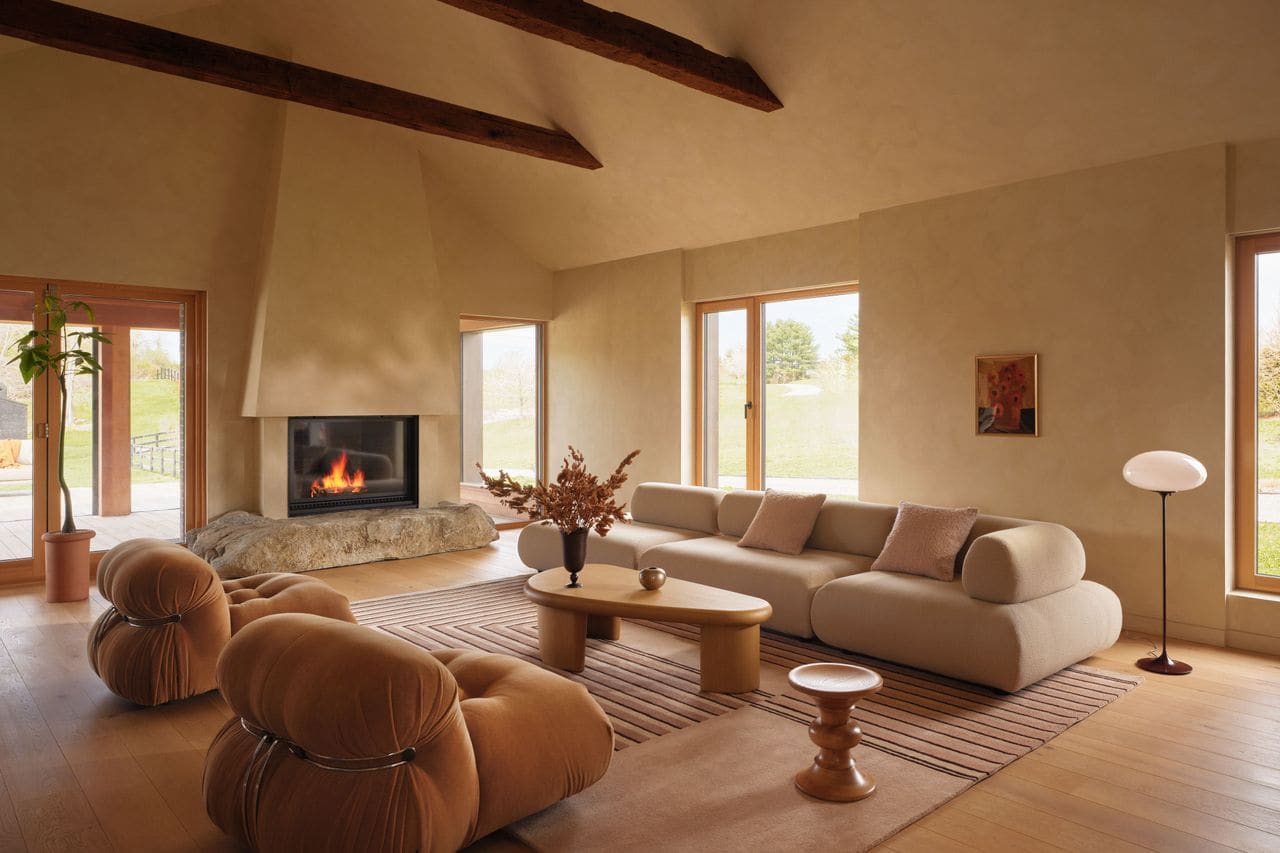
One of the defining characteristics of the Semita collection is its manipulation of pile height. By varying the depth of the wool fibers, Lee creates subtle relief within the pattern, so that light catches certain areas while others recede into shadow. This technique, common in high-quality rug making, transforms a two-dimensional design into something that shifts depending on the time of day and the viewer's position in the room. It's a form of environmental responsiveness that painting, fixed behind glass, cannot achieve.
Lee has described her design process as beginning with pattern and color, then layering in considerations of construction and material. The tactile dimension is not an afterthought but a primary concern. A rug invites physical interaction in ways that other decorative objects do not. You walk on it, sit on it, feel it beneath bare feet. That softening quality, as Lee terms it, affects how a room is inhabited, not just how it looks in photographs.
The Case for Floor-First Design
There's a practical argument for prioritizing the rug early in the design process. Furniture can be rearranged, art can be swapped out, but a rug, once chosen, tends to remain. It's heavy, expensive to ship, and its removal leaves a conspicuous void. In that sense, it functions more like architecture than decoration, a semi-permanent element that other decisions revolve around. Lee's point that a rug can introduce color, texture, and pattern more effectively than a painting is not hyperbole. A six-by-nine-foot rug occupies more visual real estate than most residential artworks, and its horizontal orientation means it interacts with every piece of furniture in the room.
Design Within Reach has historically positioned itself at the intersection of modernist principles and accessible pricing, a brand that democratized designs once available only through trade channels or high-end galleries. The addition of the Semita collection extends that mission into textiles, a category where craftsmanship and material quality are immediately legible. Handwoven rugs made from natural fibers carry a different presence than machine-made synthetics, a difference felt as much as seen.
Pattern as Narrative
The maze-like quality of the Semita pattern invites a kind of slow looking, or slow walking. Unlike a solid-color rug, which recedes into neutrality, or a highly ornate Persian rug, which can overwhelm, this design occupies a middle ground. It has enough visual incident to hold interest but enough restraint to avoid competing with other elements. The broken geometry nods to early 20th-century avant-garde movements, artists like Kazimir Malevich and El Lissitzky who used fragmented forms to suggest dynamism and change.
Lee's work sits within a broader contemporary interest in rugs as art objects, a category that has gained traction as designers and collectors recognize textiles as a legitimate medium for conceptual exploration. The practice of hanging rugs vertically, as Lee suggests, has historical precedent in both traditional cultures and modern art contexts. Tapestries have long been exhibited on walls, and the boundary between textile art and functional rug has always been porous.
Material Integrity and Regional Craft
The choice to produce the Semita collection in India, using New Zealand wool, reflects a global supply chain common in high-end rug manufacturing. India has a centuries-old tradition of hand-knotting and hand-weaving, with regional centers like Jaipur and Bhadohi specializing in techniques passed down through generations. New Zealand wool is prized for its resilience and luster, qualities that ensure the rug will age well under use. The combination of Indian craft expertise and premium fiber results in a product that balances durability with aesthetic refinement.
Studio & Projects, founded by Lee, operates at the intersection of industrial design and spatial thinking. Her work often explores how objects can shape behavior and perception, a line of inquiry that extends beyond rugs to furniture, lighting, and installation. The Semita collection represents a distillation of those concerns into a single, tactile plane.
Reframing the Domestic Landscape
At World Archi Design, we've observed a shift in how designers approach the floor plane, moving away from neutral backdrops toward surfaces that assert their own character. This is partly a reaction to the minimalist interiors of the 2010s, which often treated floors as blank slates. But it also reflects a deeper understanding of how sensory experience shapes spatial perception. A room with a well-chosen rug feels anchored, its elements held in relation to one another. Without that grounding element, even carefully selected furniture can float uneasily.
Lee's assertion that a rug is more central than a piece of art may seem provocative, but it aligns with how we actually use domestic space. We spend more time looking down than we do gazing at walls. The floor is where children play, where we sit cross-legged with a book, where we pause to put on shoes. It's a surface in constant contact, and the design decisions made there reverberate through every other choice in the room.
The Semita collection is available now through Design Within Reach, offered in multiple sizes to accommodate different spatial configurations. For those interested in Lee's broader practice, Studio & Projects maintains a portfolio of work that spans commercial and residential contexts, each project marked by the same attention to material behavior and spatial rhythm that defines the rugs.
In an era where much of design conversation centers on digital interfaces and virtual environments, there's something grounding about a conversation that begins and ends with wool, hand, and floor. The Semita collection reminds us that the built environment is still, fundamentally, a tactile one.
Photo: Design Within Reach
Save this story. A free account keeps your reading list and the 07:00 email in one place.
CREATE FREE ACCOUNT →SIGN IN