Project Info
Project Name: The PAKK Pavilion
Architects: Myceen in collaboration with EKA (Estonian Academy of Arts)
Location: Tallinn, Estonia

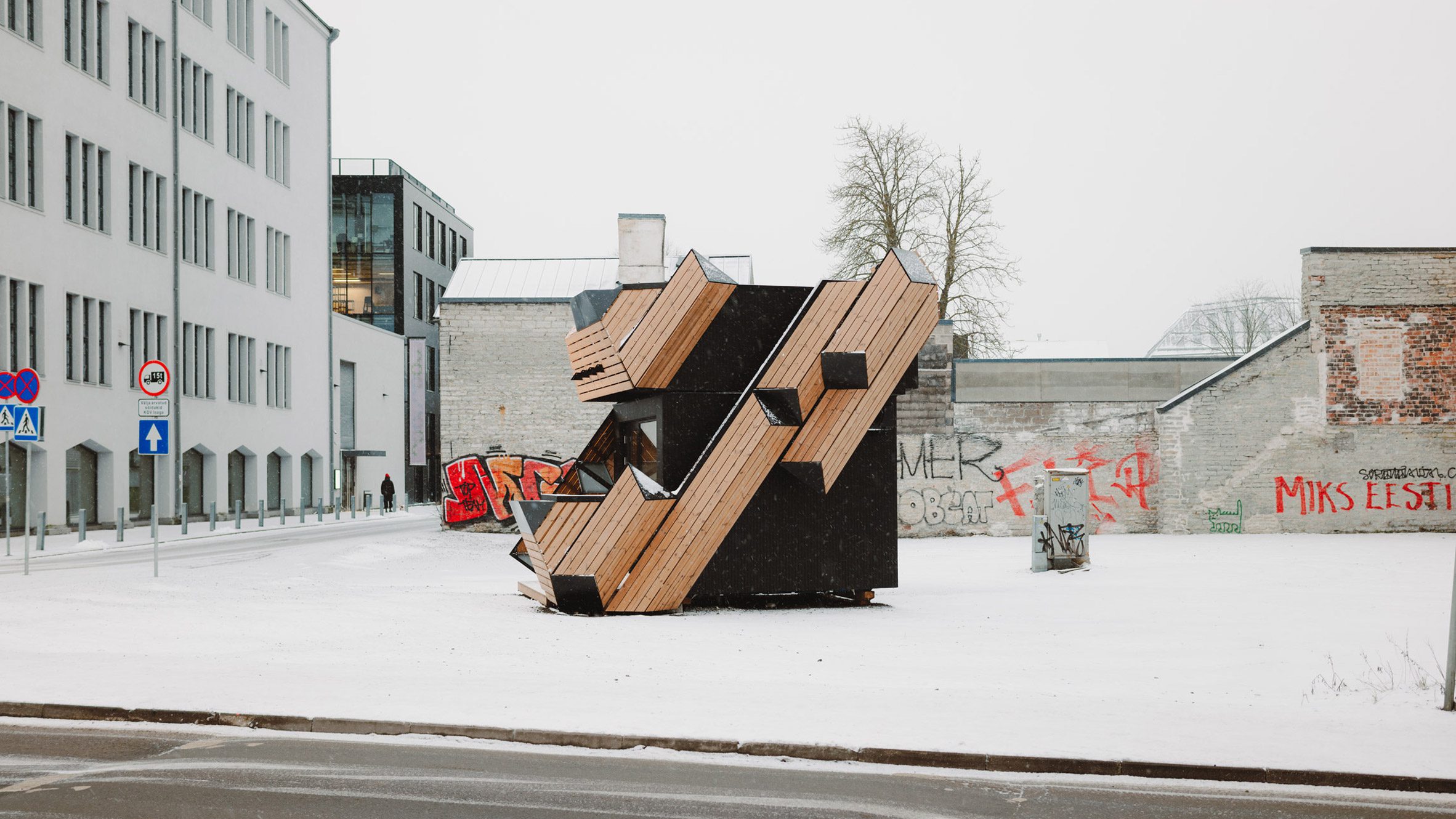
The pavilion's rhythmic, geometric facade, built from reclaimed ash, serves as a living laboratory for bio-based design
At first glance, the PAKK Pavilion appears modest, but its purpose is visionary. Conceived as a living laboratory in Tallinn, Estonia, the project explores how natural materials can be grown, reused, and reintegrated into architecture. Developed by Myceen and the Estonian Academy of Arts’ timber architecture centre (EKA PAKK), the pavilion stands as a symbol of the country’s growing dedication to circular and bio-based construction.

The warm glow from within highlights the structure's function as a shelter, insulated by experimental mycelium panels
The structure’s core idea is rooted in the potential of mycelium, the root system of fungi, as a building material. Instead of relying on conventional insulation, Myceen cultivates mycelium panels using organic waste such as sawdust and straw. These panels provide thermal efficiency and humidity regulation while being entirely biodegradable. Within the pavilion, they are arranged between layers of modular timber framing, turning fungal growth into both structure and symbol.
The architecture is guided by both experimentation and simplicity. Its form, crafted from ash timber affected by dieback disease, gives new life to materials that would otherwise be discarded. Each timber module is precision-cut and assembled into a rhythmic, geometric façade. The resulting pattern captures light and shadow across the surfaces, allowing the pavilion to change character throughout the day.

The pavilion's interior reveals the precision-cut, modular timber framework that holds the bio-based experiment
Inside, the spatial experience feels serene yet purposeful. The air carries the scent of timber and earth, reminding visitors of the organic origin of the materials surrounding them. Soft daylight enters through patterned openings, casting delicate shadows that shift with time. The pavilion encourages reflection — not only on the beauty of natural textures, but also on how architecture can learn from the cyclical processes of life itself.
The project’s environmental intelligence extends beyond aesthetics. Sensors embedded within the structure monitor humidity and temperature, testing the performance of mycelium insulation in real weather conditions. The data gathered will inform future architectural applications, proving that experimental materials can perform as effectively as industrial ones. By treating the pavilion as both a building and a scientific prototype, Myceen and EKA merge art and research in a shared pursuit of sustainability.

A cross-section of the wall panel reveals its core: bio-based insulation grown from mycelium (fungi)
Beyond its technical innovation, the PAKK Pavilion carries cultural weight. Estonia’s architectural scene has long been known for its sensitivity to context and nature. Here, that tradition evolves toward an era of regenerative design. The pavilion does not dominate its surroundings; it coexists with them. Its construction process minimized waste, and every element was designed for eventual disassembly and reuse.

Mycelium research meets geometric timber form within a humble, open natural setting
The project also invites dialogue about the future of construction. Could we one day grow buildings instead of manufacturing them? Could architecture function more like a forest, adapting and decomposing in cycles of renewal? The PAKK Pavilion does not offer definitive answers, but it poses the right questions.
As the pavilion continues to serve as a research and exhibition space, its significance grows. It stands as a poetic reminder that the boundaries between technology and biology are softening. Myceen and EKA have crafted more than an architectural experiment; they have cultivated a living metaphor for the future — one in which materials breathe, grow, and return to the earth with grace.
PHOTO CREDIT: Myceen
Save this story. A free account keeps your reading list and the 07:00 email in one place.
CREATE FREE ACCOUNT →SIGN IN