The Architect as Participant, Not Consultant
At this year's UIA World Congress in Barcelona, the housing conversation took an unexpected turn. Rather than fixating on formal innovation or material efficiency, many sessions circled back to a question architects have historically sidestepped: who owns the building after we draw it, and who decides how it evolves?
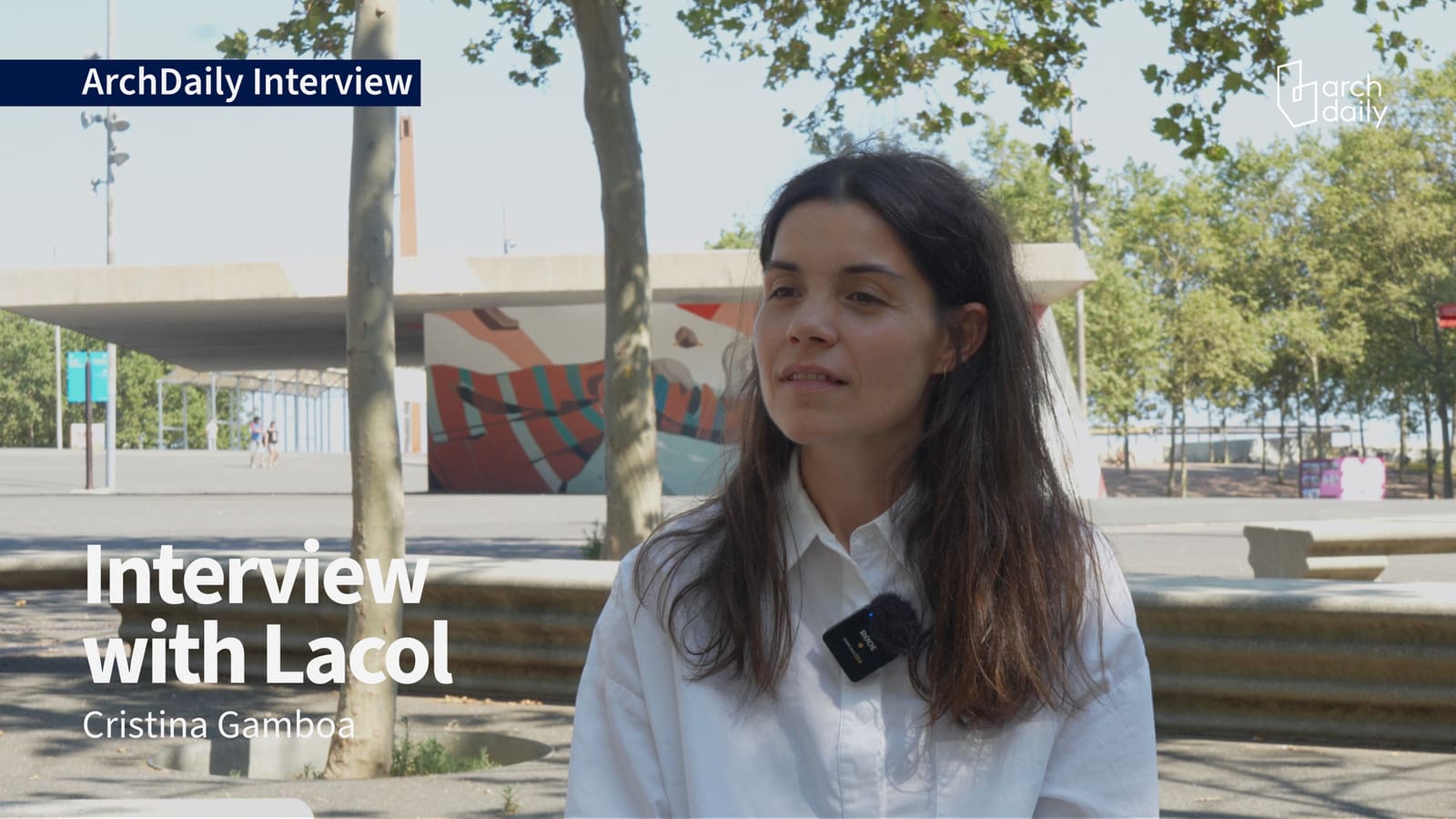
Cristina Gamboa, co-founder of Lacol, a Barcelona-based cooperative that operates simultaneously as an architecture studio, housing advocate, construction manager, and environmental research entity, arrived with a pointed answer. The cooperative model, she argues, doesn't just reorganize the internal structure of a practice. It fundamentally redefines what it means to be an architect within a housing project, collapsing the distance between designer, client, and eventual resident.
At World Archi Design, we've been tracking the rise of cooperative housing models across Europe for several years, particularly as cities grapple with escalating land costs and the retreat of public housing investment. What distinguishes Lacol's work is not novelty of form but rather the integration of design practice into a larger framework of governance and care. The studio does not hand over drawings and walk away. It remains embedded in the life of the project, often as a stakeholder itself.
La Borda and La Morada: Two Projects, One Argument
Lacol's most cited work, La Borda, sits in the Sants neighborhood of Barcelona. Completed in 2018, the project houses approximately 28 residential units within a cooperative ownership structure. Residents do not own individual apartments; instead, they hold shares in a cooperative that collectively owns the building. Decisions about maintenance, use of communal space, and future modifications are made through assembly processes rather than developer mandates or homeowner association bylaws.
The building itself employs cross-laminated timber construction and integrates passive climate strategies, including deep overhangs and natural ventilation corridors. But Gamboa insists that the material palette is secondary to the governance model. The architecture, she notes, must accommodate long-term flexibility because the community that inhabits it will inevitably change. Design decisions are made not to impose a vision but to enable adaptation.
La Morada, another cooperative housing project involving Lacol, extends similar principles into a different urban context. Here, the emphasis shifts slightly toward intergenerational living and the integration of care infrastructure within the residential framework. Ground-floor spaces are designed to support shared services, communal kitchens, and flexible work areas, blurring the boundary between home and neighborhood institution.
Both projects operate under the cesión de uso model, a legal framework common in Spain that grants long-term usage rights without transferring ownership. This structure insulates housing from speculative markets while ensuring that residents retain control over their living environment. It is a model that requires architects to think beyond the construction phase and into the decades that follow.
Participation as Structure, Not Gesture
One term that surfaced repeatedly during Gamboa's Congress remarks was participation. But she was careful to distinguish between participatory design as a consultative exercise and participation as a structural condition of the project itself.
In conventional practice, participation often means workshops, surveys, or charrettes, events where architects solicit input and then retreat to synthesize it into a design. Lacol's approach inverts this. Residents are not consulted; they are co-authors. Decisions about spatial organization, material selection, and even budget allocation are made collectively, often through multi-hour assemblies that can feel more like municipal governance than design review.
This process is slow. It is also messy. Gamboa acknowledges that it demands a different temperament from architects accustomed to authorship and control. But she argues that the slowness is productive. It forces all parties to confront trade-offs, to negotiate between individual preferences and collective needs, and to build the social infrastructure that will sustain the community long after the building is occupied.
Precedents for this kind of practice exist, though they are scattered. The cooperative housing movements in Zurich, the co-housing experiments in Denmark during the 1970s, and the community land trusts emerging across the United Kingdom all share a commitment to decommodifying housing and embedding residents in decision-making structures. What Lacol contributes is a contemporary synthesis that integrates environmental performance, dense urban contexts, and legal frameworks tailored to the Spanish housing crisis.
Redefining Professional Identity
Gamboa's remarks also touched on the internal organization of Lacol itself. As a cooperative, the studio operates without hierarchical management. Profits are shared equally, and strategic decisions are made collectively. This structure extends the principles of cooperative housing inward, treating the practice itself as a commons.
The implications for professional identity are significant. In a cooperative model, the architect is not an expert dispensing knowledge from above but a collaborator embedded within a network of expertise that includes builders, social workers, engineers, and residents. This does not diminish the technical skill required; if anything, it demands greater fluency across disciplines. But it does challenge the romantic notion of the architect as solitary genius.
This shift resonates with broader debates within the profession about labor, equity, and the social contract of design. As architecture schools continue to graduate students into an industry characterized by low pay, long hours, and precarious employment, alternative models of practice become not just ideologically appealing but economically necessary. Lacol offers one possible template, though it is hardly the only one.
Implications Beyond Barcelona
The cooperative housing model is not universally exportable. It depends on specific legal frameworks, access to public land, and a political climate willing to support alternatives to market-rate development. In Barcelona, the city government has played a crucial role by ceding municipal land to cooperative projects under favorable terms. In other contexts, particularly in jurisdictions where land is privately held and housing policy is dominated by market logic, replicating this model is more difficult.
Yet the underlying argument that Gamboa advances, about the inseparability of design from governance, about the necessity of long-term stewardship, about the architect's responsibility to structures of care, travels more easily. It challenges the profession to think beyond the building as object and toward the building as social infrastructure, as a site of ongoing negotiation and collective life.
In recent years, we've seen a proliferation of projects that gesture toward these ideas, integrating communal kitchens, shared workspaces, or flexible ground floors. But many remain speculative developments dressed in the language of community. What distinguishes Lacol's work is the legal and organizational scaffolding that underpins it. The architecture is not a stage set for collective living; it is the physical manifestation of a governance model that residents actually control.
The Future of Cooperative Practice
As housing crises deepen across global cities, the question is no longer whether alternative models are desirable but whether they can scale. Cooperative housing remains a marginal practice, constrained by financing challenges, regulatory barriers, and the sheer difficulty of organizing communities around collective ownership.
Gamboa does not claim to have solved these problems. But she insists that the cooperative model offers a viable path forward, one that aligns the interests of residents, architects, and the broader urban ecosystem. It requires patience, political will, and a willingness to rethink the architect's role. But it also produces housing that is genuinely affordable, ecologically responsible, and socially resilient.
The conversation at the UIA Congress was one moment in a much longer dialogue. But it underscored a shift that is becoming harder to ignore: the future of housing may depend less on what architects design and more on how they organize, who they work with, and what structures of ownership and care they help to build.
Credit: ArchDaily
Save this story. A free account keeps your reading list and the 07:00 email in one place.
CREATE FREE ACCOUNT →SIGN IN